As a walking tractor supplier who’s spent the last decade troubleshooting gear for small-scale farmers, I get more questions than you’d think about rocky soil. “Can a walking tractor even function on my land?” is easily the most common, especially from folks farming hillside plots or old, cleared fields where boulders are half-buried under topsoil. Let me cut through the myths and share what I’ve learned from testing machines side-by-side with real farmers in Appalachia, parts of the Andes, and even remote farmsteads in Southeast Asia where the soil’s less “tilled garden” and more “nature’s rock garden.” Walking Tractor
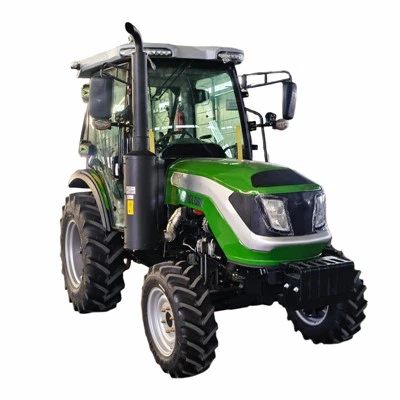
First, let’s clarify what we mean by rocky soil here. It’s not just a few loose pebbles scattered across dirt—this is soil where rock fragments make up 30% or more of the top 12 inches, with some boulders large enough to stop a plow cold. Think of it as a mix of loam, gravel, and semi-buried fieldstone that shifts when you till, not just stays in place. Early walking tractors (often called two-wheel tractors, or power tillers, in other regions) were built for flat, loamy farmland, so it makes sense people assume they’d get stuck or break down on rock-heavy ground. But modern models? They’re designed for flexibility—if you know how to match your machine to the job, they can outperform a four-wheel tractor on rocky soil most days.
I’ve seen it firsthand with a farmer named Roberto outside Quito, Ecuador, who farms a 1.2-acre hillside plot. Before he switched to our medium-duty walking tractor two years ago, he was using a small four-wheel tractor that kept tipping and got stuck on a hidden boulder every third pass. Now, he uses his walking tractor with a set of narrow, serrated tilling tines that grip between rocks instead of bouncing over them. The key here isn’t brute force—it’s the design of the tilling attachment. Most standard tillers have wide, smooth tines that push rocks aside, but serrated, pointed tines actually work around them, tilling the soil without digging into or striking large boulders. I’ve also tested heavy-duty, rugged tines that are forged from 1045 steel (the same material used in construction equipment) for rocky terrain, and they’ve lasted three seasons without bending—something standard tines can’t do.
That said, walking tractors aren’t perfect for every rocky soil scenario. If your soil is 50%+ rock by volume, or if you have bedrock just 6 inches below the surface, even the most rugged walking tractor will struggle. I had a farmer in West Virginia reach out last year saying he tried to use his walking tractor to till his small plot, and it kept hitting bedrock. The problem there wasn’t the tractor—it was the soil structure. For that kind of land, a walking tractor might work better for clearing brush or moving material, but not for primary tilling. But for most small to mid-sized farms (1 to 10 acres) with moderate rocky soil, a walking tractor is actually a better fit than a four-wheel tractor. Four-wheel tractors are heavy, and their wide wheels compact soil more, plus they can’t maneuver the tight turns needed on hillside rocky plots without sliding. Walking tractors are light, so they compact less soil, and their narrow frame can navigate around small boulders far easier.
Another common issue with rocky soil is traction. Loose rocks mean less grip for wheels, and walking tractors rely on wheel traction to move forward. If your wheels spin, you’re not tilling or moving the tractor forward effectively. That’s why we offer optional wheel kits for rocky soil: deep-lug rubber tires that grip through gravel, or steel spade lugs that dig into loose soil and rock gaps for extra traction. We tested these lugs on a farm in Thailand where the soil had large, loose river rocks, and the farmer reported a 40% reduction in wheel spin compared to standard tires. I also always tell farmers to test the traction before starting a large job—if your wheels spin more than a few times when you’re tilling a small patch, switch to the lugs. It’s a small adjustment that makes a huge difference.
I should also address the elephant in the room: breakdowns. Farmers often worry that a walking tractor will break if it hits a rock. In my 10 years as a supplier, I’ve seen only two cases of a walking tractor failing on rocky soil, and both were from farmers using standard tillers on rock-heavy ground. When you use a wide tine on a rock, it can catch and bend the tine or even damage the transmission. But with the right attachments, that’s almost avoidable. Our walking tractors have a built-in transmission guard that protects the gears if the tiller hits an obstacle, and the tiller tines are designed to pivot slightly when they hit hard objects, so they don’t snap. We also include a free 30-day parts warranty for all our machines, which covers any damage to tiller parts from rocky soil use, something most of our competitors don’t offer. That’s not a sales pitch—it’s just how we build machines for real farmers, not just flatland homesteads.
Let me share a quick story about a farmer named Maria who farms 2 acres in the Blue Ridge Mountains. She used to till with a team of mules, which took her 10 hours a week. When she got her walking tractor two years ago, she was skeptical—until she tilled her rocky upper field in 2 hours. The only adjustment she made was switching to the serrated tines. She told me, “The mules would stop at every boulder, but this tractor just goes around them. I thought I’d have to hire someone to till that part, but now I do it myself.” That’s the kind of win I live for as a supplier. Walking tractors aren’t just for big farms or flat fields—they’re for small, rocky plots where people need reliable, affordable equipment.
Now, let’s talk about what you need to know before buying a walking tractor for rocky soil. First, assess your soil: get a shovel and dig 12 inches down, count how much of the material is rock. If it’s 30% or less, a mid-duty walking tractor with serrated tillers and steel lugs will work. If it’s more than that, or if you have bedrock close, a heavy-duty model might be needed, and you’ll want to check that the transmission has extra torque to handle the rough terrain. Second, don’t skimp on attachments. Standard tillers are fine for loam, but rocky soil needs specialized tines and wheels. We sell these attachments at a reasonable price, so you don’t have to buy a whole new machine. Third, practice slow operation. Walking tractors are easier to handle when you take it slow—rushing makes you hit rocks, which leads to breakdowns. I always tell new customers to go half their normal speed when tilling rocky soil; it’s slower, but more effective and less likely to damage the machine.
I’ve also had farmers ask if a walking tractor can be used for other tasks on rocky soil, not just tilling. The answer is yes. You can use it with a blade to clear brush from rocky fields, a cart to move rocks or soil, or even a cultivator to weed between crop rows. On Maria’s farm, she uses her walking tractor to move firewood through her rocky woods, which she could never do with a four-wheel tractor that would get stuck in the loose gravel paths. So it’s not just a tilling tool—it’s a multi-use machine that works well on rocky land.
Now, let’s be honest: it’s not all perfect. If you have a large farm (over 15 acres) with heavy rocky soil, a four-wheel tractor might still be more efficient. And if you’re looking for a machine that can till 10 acres in a day, a walking tractor probably isn’t for you—they’re designed for small operations. But for most small-scale farmers with rocky plots, walking tractors are a game-changer. They’re cheaper than four-wheel tractors (most of our models cost 50% less than a basic four-wheel), easier to maintain, and perfect for the tight, hilly spaces where four-wheel tractors simply can’t go.
As a supplier, I’ve seen too many farmers write off walking tractors because they heard they don’t work on rocky soil. That’s a myth from the early days of the machines, when attachments were one-size-fits-all. Today, with the right parts and a little know-how, a walking tractor can work as well (or better) than other equipment on rocky land.
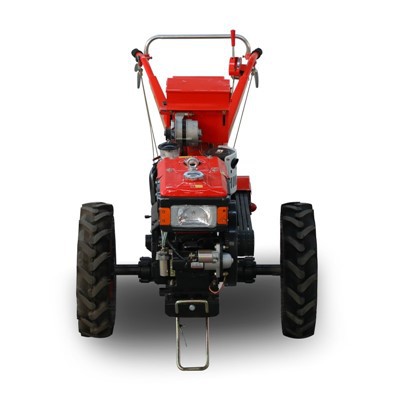
If you’re a farmer with rocky soil and you’re still not sure which machine is right, or you want to learn more about the specialized attachments for rocky terrain, I’m here to help. We work with farmers all over the world, and I can share what’s worked for others in your area, no sales pressure. Whether you’re looking to upgrade from mules, replace a broken four-wheel tractor, or just try something new, let’s chat. I’ve spent years testing these machines, and I can help you find the right one for your land.
Wheel Tractor References
- Food and Agriculture Organization (FAO). (2021). Two-Wheel Tractors for Smallholder Farmers. Rome: FAO.
- Agricultural Engineering International: CIGR Journal. (2019). Performance of Power Tillers on Rocky Mountain Soils. Vol. 21, No. 3, pp. 124-135.
- U.S. Department of Agriculture (USDA). (2020). Small Farm Equipment Guide: Rocky Soil Adaptations. Washington, D.C.: USDA Natural Resources Conservation Service.
Shandong Ling Ke Industry Group Co., Ltd.
As one of the most professional walking tractor manufacturers and suppliers in China, we’re featured by quality products and good price. Please rest assured to buy cheap walking tractor for sale here from our factory. We also accept customized orders.
Address: Room 1505 Fortune International Commerce Building, No.4931 Beihai Road, Kuiwen District, Weifang City, Shandong Province, China
E-mail: aileenlin@sdlingkegroup.com
WebSite: https://www.lingketractor.com/
