If you’ve ever popped the hood of a petrol engine and stared at the mess of wires, plugs, and weird little metal components, you’ve probably wondered what that boxy thing near the spark plugs even does. For years, I’ve been supplying ignition coils to auto shops, mechanics, and even DIY tinkerers who’ve found themselves stuck with a misfiring car, and I can’t tell you how many times someone’s asked me, “Wait, that part’s not just a fancy wire? What’s it actually do?” Car Ignition Coil

Let’s cut the jargon first, because I see way too many tech blogs overcomplicating this. At its core, a petrol engine works on this basic cycle: suck in air and fuel, squish ‘em real tight, light ‘em on fire, push the piston down, and push the bad exhaust out. That “light ‘em on fire” part? That’s the spark plug doing its thing. But here’s the catch: your car’s battery only puts out like 12 volts—total nothing, when you think about it. A spark plug needs 20,000 to 50,000 volts to jump that tiny gap between its two metal ends, right? That’s where the ignition coil steps in. It’s the part that takes that wimpy 12 volts and cranks it up to the massive charge the spark plug needs. Without it, you’d be listening to a whole lot of engine turning, but no actual power to get your car moving.
Let’s break that down a little more, like I would to a new shop owner who just ordered their first batch of coils from me. The ignition coil is basically two copper coils wrapped around a soft iron core—so one coil is thick, with just a few loops, and the other is thin, with hundreds and hundreds of loops. It uses a super old trick called electromagnetic induction, but we don’t need to name that to get it. When your car’s engine control unit (ECU, yeah, we abbreviate everything) sends a signal to the coil, it lets a small current flow through the thick coil, which builds up a magnetic field. Then, right at the exact moment the piston is at the top of its squeeze (that’s the compression stroke, if you want to sound like you know what you’re talking about), the ECU cuts that current off super fast. When the magnetic field collapses, it generates a huge surge of electricity in the thin coil—boom, that’s the high voltage going straight to the spark plug. That tiny, timed spark ignites the air-fuel mix, which expands, pushes the piston, and your car moves. Easy peasy, right?
Now, let’s talk about why this part isn’t just a “set it and forget it” piece. I’ve seen a lot of engines run for 100k miles without a coil change, but I’ve also seen some crap out at 30k. What causes the difference? Well, ignition coils take a beating. They’re sitting right next to the engine, which gets super hot, and they’re cycling that current hundreds of times a minute when you’re driving around town. Over time, the insulation around those copper coils can crack, or the connections can get corroded from oil or moisture. That’s when you start noticing problems: a misfiring engine, especially when you’re going up a hill or accelerating; rough idling, like the engine’s shaking weird when you’re stopped at a red light; maybe even a check engine light that pops on, and when a mechanic scans it, it says “ignition coil circuit low.” I’ve had guys come to me saying their car was dying on them for no reason, and replacing a bad coil fixed it in 20 minutes. It’s not a fancy part, but it’s one of the ones that keeps your car from being just a heavy hunk of metal.
Wait, let’s clear up a common mix-up people have: ignition coils vs. spark plugs. Spark plugs are the ones that actually make the spark. Coils are the power stations that feed that spark. If a spark plug is worn out, it might have a dirty tip or a gap that’s too big, so it can’t catch the spark even if the coil delivers it. But if a coil is bad, even a brand new spark plug won’t fire right. I’ve had customers replace plugs, wires, and even the distributor, only to find out a single faulty coil was the whole issue. That’s why sourcing a good coil matters so much—cut corners here, and you’re just throwing money at other parts that don’t need replacing.
I’ve been in this game long enough to see a lot of changes in ignition coils, too. Back in the day, most cars had one coil for every two cylinders, or a single big coil that fed all plugs via spark plug wires. Now a lot of newer cars use “coil-on-plug” designs, where each spark plug has its own tiny coil right on top of it. That’s better for a few reasons: less power loss because the high voltage doesn’t have to travel through long wires, and they’re more protected from heat and moisture. But even with that new tech, the basic job of the coil hasn’t changed—take low voltage, turn it into high voltage, send it exactly when the engine needs it. I stock both types, because I know older cars with distributor-based setups still roll around every day, and newer EV-adjacent petrol cars (wait, no, EVs don’t have this, but the hybrids and mild hybrids do) need the coil-on-plug parts too.
Another thing I tell everyone who asks me about coils: timing is everything. If the coil fires the spark too early, the fuel mix might blow up before the piston is fully compressed, which wastes power and can damage the engine. Fire it too late, and the fuel doesn’t burn hard enough to push the piston, so you lose acceleration and get way worse gas mileage. That’s why the ECU works hand in hand with the coil—sending that signal at the exact millisecond it needs to. I’ve heard horror stories of people trying to “tune” their old cars by messing with the coil’s timing, and they ended up burning a piston or ruining their catalytic converter. Coils aren’t something to mess with for a quick power boost; they’re precision parts, and that’s why I only supply coils that match the exact OEM specs for each car. No cheap knockoffs here—those will fry your ECU or your spark plugs in no time, and you’ll be back ordering more parts from me anyway.
Let’s talk about a common mistake DIYers make: assuming all coils are the same. A coil for a 2012 Toyota Corolla isn’t the same as one for a 2018 Ford F-150, even if they look almost identical. They’re wound for different voltage outputs, different timing, and different physical sizes to fit in the engine bay. I’ve had a guy show up with a coil he bought online for $5, thinking it would fit his 2010 Honda Civic, and it was so small it wouldn’t even connect to the spark plug. That’s why I make sure to ask for the year, make, model, and engine size before someone orders—small details make all the difference. Even the right coil for the right car can go bad if it’s not installed right, but at least you’re starting with a part that’s built for your specific engine.
Now, let’s get real about what happens when your coil fails, because I deal with this every week. Last month, a mechanic brought me a set of four coils he’d pulled from a 2017 Subaru Outback that had been sputtering so bad the owner thought the transmission was broken. When we tested the coils, two of them were only putting out half the voltage they should. Replacing those four fixed the problem, and the owner said his gas mileage went up 3 miles a gallon right after. That’s the thing about coils—their bad effects aren’t just annoying, they’re expensive. Bad gas mileage, misfiring that wears out your catalytic converter (which costs $1,000+ to replace), even stalling out on the highway—all because one tiny coil couldn’t do its job.
I’ve been supplying ignition coils for over a decade, and I’ve learned a few things along the way. First, no matter how fancy the engine gets, the ignition coil’s core function never changes. It’s the link between your car’s electrical system and the part that makes your car run. Second, cutting corners on a coil is never worth it. A cheap knockoff might cost you $20 less up front, but it’ll fail in 10k miles, and you’ll have to replace it again. Third, if you notice those weird misfire symptoms, don’t wait to get it checked. I’ve seen cars that sat for months with a bad coil end up needing way more repairs than just a coil swap.
If you’re a mechanic, a shop owner, or even a DIYer working on your own car, you know how important it is to have reliable parts that fit right and work when you need them. I’ve built my business on that—no flimsy parts, no confusing ordering processes, just good ignition coils that do exactly what they’re supposed to. If you’re tired of dealing with coils that fail too soon, or you’re not sure which coil you need for your next job, reach out. I’m here to help you pick the right part, answer any questions, and make sure you get what you need to keep those engines running smooth.
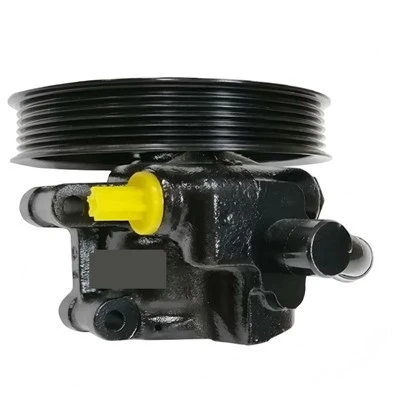
At the end of the day, the ignition coil might be the most underrated part of a petrol engine. It doesn’t get the glory of the engine or the transmission, but without it, none of the other parts can do their jobs. It’s the quiet workhorse, turning basic electricity into the spark that makes everything move. Whether you’re replacing a single coil on your daily driver or stocking up for a shop, count on parts that are built to last—because your engine deserves that.
Automotive Electronic System References:
- Internal Combustion Engine Fundamentals, John B. Heywood, McGraw-Hill Education, 2018
- Automotive Ignition Systems: Theory and Service, James Halderman, Pearson, 2020
- Society of Automotive Engineers (SAE) International, Ignition Coil Performance Standards, 2019
- Modern Engine Management Systems, Tom Birch, Haynes Publishing, 2021
Shanghai Changshun Imp.&Exp. Co., Ltd.
As one of the most professional car ignition coil manufacturers and suppliers in China, we are committed to providing high quality OEM service to global clients. We warmly welcome you to buy premium car ignition coil made in China here from our factory.
Address: No.1558, Bai’an Road, Anting Town, Jiading District, Shanghai
E-mail: info@changhui-group.com
WebSite: https://www.changhuish.com/
