Hey folks, if you’ve ever wondered what keeps the wires and cables running behind your walls, in your car, or powering your office gear from turning into a fire hazard, you’re in the right spot. As someone who’s spent years building wire cable flammability testers— the machines that test those cables before they hit the market—I get asked all the time: “What are the actual national standards for this in the US?” Let’s break this down like I’d chat with a customer or a buddy over coffee, no stuffy jargon, just real stuff. Wire Cable Flammability Tester
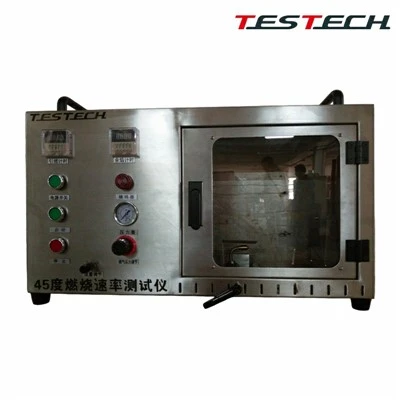
First off, the US doesn’t have one single national standard for cable flammability—they’ve got two main bodies that set the rules, and they’re the ones every tester and manufacturer lives by. The big ones are UL (Underwriters Laboratories, basically the gold standard for safety testing here) and NFPA (National Fire Protection Association). Then there’s also ANSI, the American National Standards Institute, which kind of oversees that these standards are consistent, not made up out of nowhere. Let’s start with UL because that’s where most cable flammability testing happens, hands down.
UL 1581 is the bible for electrical wires and cables in the US, no cap. If a wire brand wants to say their cables are safe, they almost always get this certification, and it’s not a single test—it’s a bunch of different ones depending on what type of cable it is, where it’s used. Let’s run through the key tests in UL 1581 that we build testers for, because that’s what we care about (we don’t make random machines, we make the ones that actually pass this standard). The Vertical Flame Test (VFT) is super common for things like building wires, appliance cords, or extension cords. Here’s how it works in real life, not the textbook: you take a 24-inch long sample of cable, strip off a tiny bit of the outer jacket so the inner conductors are exposed a little, clamp it upright in our tester, and hold a Bunsen-style flame (specifically a 1.5-inch blue flame, set to 2300°F) to the bottom of the sample for 15 seconds. Then you pull the flame away and time how long the jacket keeps burning, and also if the burning stuff drips on a cotton pad below. The rule here is the flame can’t burn longer than 60 seconds after you take the flame away, and those drips can’t set the cotton on fire. That’s the basic one, but there’s a tougher version, too—the Vertical Flame Test for Cables in Racks, sometimes called the Tray Test or UL 1685, wait no, hold on, UL 1685 is separate for cable trays and raceways, that’s for when a whole bunch of cables are stacked together in a ceiling or a wall, like in office buildings or data centers. That test is way bigger: you hang 10 8-foot long cable samples side by side in a rack, light a 7-foot flame at the bottom for 20 minutes, and check how far the flame spreads up the cables—can’t go more than 5 feet, and no burning drips that cause a fire outside the rack.
Then there’s the Horizontal Flame Test, which is for thinner stuff like communication cables, Ethernet cords, or speaker wire. You lay a 12-inch sample horizontally, hold the flame to one end for 1 second, pull it, and the flame can’t burn past the 5-inch mark on the sample, and again, no burning drips. That’s a quicker test, but still non-negotiable. UL 2556 is another one, for electrical wires used in appliances, power tools, even EV components now—super important because EV cables have to handle way more heat and stress than regular car wires. The test here is a bit different: you coil the cable around a metal mandrel, heat it in an oven to 158°F for 4 hours, then do the vertical flame test, and the jacket can’t crack or catch fire after all that heating and bending. That’s the one that tripped up a few EV brands a couple years back, right? They skipped the heat testing part, and their cables failed, so now everyone’s scrambling for testers that can handle UL 2556.
Now, NFPA—their big one is NFPA 70, which is the National Electrical Code (NEC). This isn’t just a testing standard, it’s the code that every electrician has to follow when wiring a house or building. Part of NEC requires that any cable used in plenum spaces (that’s the space between the ceiling and floor in offices, where air circulates for HVAC) has to pass a higher flammability test, right? Plenum cables can’t release toxic fumes or burn too easily, because if a fire starts there, it spreads through the air system. So NFPA 262 is the test for plenum cables, which is pretty intense: you burn a 20-foot sample in a big chamber, measure how much smoke it gives off, and the flame spread rate has to be super low—way lower than regular building cables. Our plenum testers are built specifically to run NFPA 262, so that’s a big part of what we make these days, since more buildings are requiring plenum cables to meet that rule.
Wait, there’s also the CSA standard? No, that’s Canada, don’t mix that up. We’re talking US here, so ANSI has adopted most of the UL and NFPA standards as national, so when you see a cable with ANSI certification, that just means it passed UL 1581 or NFPA 70. Another one that comes up a lot for industrial cables is UL 1277, which is for power cables in factories, mills, places with heavy equipment—those cables have to not just catch fire, but also not spread fire through the whole plant, so the test is longer, the flame is bigger, the sample is way thicker.
Let me throw in a real story here, because that’s how I learn this stuff. A few months back, a manufacturer came to us complaining that their cables kept failing the vertical flame test, but they were following the old specs. Turns out, UL updated UL 1581 a couple years ago—they changed the flame duration from 10 seconds to 15 seconds, and adjusted the size of the flame tip by a quarter inch. They were using an old tester that couldn’t produce the exact flame size, so their tests were off. That’s why we update our testers every 2 years, to match the standard changes, not just build the same machine over and over. A lot of suppliers cut corners, but we don’t—because if your tester isn’t calibrated to the exact standard, you’re going to get false passes or false fails, and that’s a big deal when a cable’s safety is on the line.
Now, what about specialty cables? Like the ones used in airplanes, or ships, or even solar panels in your backyard? For aerospace, it’s FAA standards, which reference UL 1581 too, but add extra stuff like low smoke and toxic emissions—because if a plane’s cabin fills with smoke during a fire, that’s deadly. For solar cables, UL 1703, which tests how they hold up to UV light AND flame, because solar panels are outside, in the sun, so their jackets can’t brittle up and catch fire after a few years. That’s another growing market for us, as more people install solar, so those cables need a specific tester that combines UV exposure and flame testing.
Wait, let’s clear up a common misconception: people think “flammability” just means if it catches fire, but it’s way more nuanced. Standards don’t just say “no flame”—they care about burn time, drip ignition, smoke, toxic fumes, even how the cable behaves after being bent or heated. That’s why our testers don’t just apply a flame and stop. For example, the drip test: if a cable’s burning jacket drips molten plastic on the cotton pad below, and the cotton catches fire, that’s a fail. Because those drips can spread a fire to other wires nearby, which is how most building fires start—not the main cable, but the small drips. We built our testers with a adjustable cotton holder, so you can set it exactly 18 inches below the sample, which is the exact distance the standard requires, no guesswork.
Another thing: calibration. The standards don’t just set the test conditions, they require that the tester itself is calibrated regularly. So a manufacturer can’t use a 5-year-old tester that’s out of whack with flame temperature—they have to test the flame every month with a thermocouple, check the height of the sample clamp, make sure the timing is exact (15 seconds for the flame, not 14, not 16). We sell calibration kits along with our testers, and offer on-site calibration service too, because if a manufacturer gets a bad calibration, their whole batch of cables could fail inspection, which costs them thousands in wasted materials and delays.
Let’s talk about who enforces these standards. It’s not like a cop knocking on a factory door to test every cable—most of it is third-party certification, like UL or ETL (which is another big one, similar to UL). So a manufacturer sends a sample to UL, they test it with a standardized machine, if it passes, they get the certification. But if a factory is making cables without the certification, or cutting corners on the test, OSHA can step in, especially for industrial sites, because OSHA uses these national standards as the rule. So for example, if a building uses uncertified plenum cables and there’s a fire, OSHA will fine the building owner, and the cable manufacturer might get in legal trouble.
Now, why does this matter for our business? Because every time a standard updates, we have to adjust our testers. Last year, NFPA updated NFPA 262 to make the smoke test stricter—they now measure not just total smoke, but specific toxic gases like carbon monoxide. So we had to add a smoke analyzer feature to our plenum testers, which we did, and now we’re the only supplier in the US that makes a tester that’s calibrated to the 2024 update of NFPA 262. That’s what sets us apart from the big corporate suppliers—we listen to what manufacturers and inspectors need, not just what the standard says on paper.
Wait, let’s make sure I don’t mix up the standards. Let me list them clearly so you can reference if you’re a manufacturer: main US national standards for wire cable flammability testing are UL 1581 (general electrical wires), UL 1685 (cable trays), UL 2556 (appliance/EV wires), NFPA 70 (NEC, for building wiring), NFPA 262 (plenum cables), UL 1703 (solar cables), ANSI/UL 1277 (industrial cables). That’s the core list, no extra stuff.
A quick example of a real fail: a few years back, a popular brand of home extension cords were found to fail the UL 1581 vertical flame test. Their outer jacket was made of a cheaper plastic that burned too fast, and the drips caught fire. The CPSC (Consumer Product Safety Commission) recalled like 10 million of them, and the manufacturer had to pay millions in refunds. That’s why having the right tester, calibrated to the exact UL specs, isn’t just a hassle—it’s the difference between a safe product and a national recall.
Now, if you’re reading this, and you’re a cable manufacturer, an inspector, or someone who needs to set up a testing lab, you probably have questions about what tester you need. Do you need a basic vertical flame tester for regular building wires? Or a plenum tester for your commercial cables? Or an EV cable tester that handles UL 2556? We build all of them, and we don’t just sell a machine and leave you hanging—we help you set it up, train your team on how to run the tests correctly, and stay up to date with every standard update.

If you’re tired of testers that don’t match the latest national standards, that break down too fast, or that don’t give you accurate results, let’s chat. We can walk through your specific cable type, the standards you need to meet, and build a tester that fits your budget and your needs. No pushy sales talk, just real answers from someone who’s been in this industry for 15 years, testing cables and building testers.
Fabric Flammability Tester References: UL 1581, UL 1685, NFPA 70, NFPA 262, ANSI/UL 1277, UL 2556, UL 1703, CPSC Consumer Product Safety Commission Recalls, OSHA Electrical Safety Standards.
TESTech Instrument (Suzhou) Technologies
TESTech Instrument (Suzhou) Technologies is one of the most reliable wire cable flammability tester manufacturers and suppliers in China. If you’re going to wholesale durable wire cable flammability tester, welcome to get quotation from our factory. For price consultation, contact us.
Address: 8/F, R&D and Production Workshop No. 5, Jiangsu Guoqian Technology Innovation Industrial Park, 168 Lüliangshan Road, Huqiu District, Suzhou, Jiangsu Province, China
E-mail: sales@testech.com.cn
WebSite: https://www.testechfiretest.com/
