Hey everyone, UPE Hose
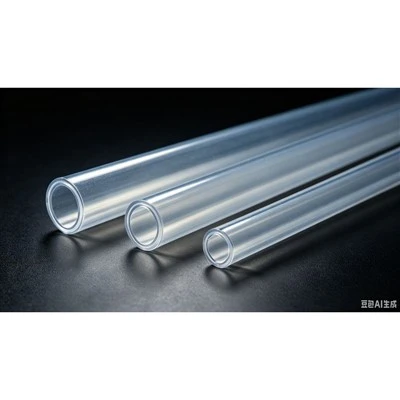
If you’re here because you recently looked into UPE hoses—also known as ultra-high molecular weight polyethylene hoses—then you probably already know they’re a workhorse in all kinds of industries: food processing, mining, chemical handling, slurry transport, even water treatment. But the one question we get asked more than any other here at our shop is, “What’s the actual temperature range these hoses can handle before I start having problems?” And yeah, I get it—choosing the wrong hose for the heat (or cold) your operation runs at means leaks, downtime, or even full-on hose failure, which is a nightmare no one wants to deal with. Today, I’m breaking this down straight, no overly technical jargon, because I know most of you reading this are on the floor making decisions, not just reading lab reports.
First, let’s start with the basics so we’re all on the same page: UPE is different from regular polyethylene (PE) hoses you might have picked up at a hardware store. Regular low-density PE is soft, melts at like 250°F, and falls apart in cold weather. UPE is made with way longer polymer chains—like, a molecular weight of 3 to 6 million, versus regular PE’s 100k to 500k. That long chain is why it’s so tough, so resistant to abrasion, and why its temperature range is way wider, but it’s not unlimited. A lot of new customers think “it’s plastic, it can handle anything” and then get frustrated when their hose cracks in a cold warehouse or softens when they run hot slurry through it. Let’s split this into two parts: cold temperature first, then hot, because both matter a lot for different use cases.
Starting with the cold side. This is where UPE really shines compared to other plastic hoses. I’ve had customers in northern Canada, mining crews running in Alaska, food service guys storing hoses in walk-in freezers, and even construction teams running water lines in winter up there, and none of them have had issues down to about -40°F. Wait, that’s -40 Celsius too, right? Yeah, the old “F and C meet at -40” line actually checks out here. But let’s be real—most operations aren’t running at that extreme, so what’s the practical cold limit you need to care about? For 90% of our customers, that’s around -20°F to -10°F. Below that, you might start noticing a tiny loss of flexibility, but that’s only if you’re bending the hose a lot when it’s super cold. If you’re running it straight, carrying a viscous fluid, no problem at all. I remember one customer in Minnesota who used our UPE hoses for deicing fluid transfer last winter, and they said they left them outside overnight at -28°F and didn’t have a single crack or stiff spot when they turned them on at 6 a.m. That’s way better than rubber hoses, which get brittle around 32°F (freezing) and snap if you step on them when they’re cold.
Now the hot side—this is where I see people mess up all the time. UPE’s melting point is around 250°F, but that’s the absolute max if you just want the hose not to melt. But here’s the thing: when plastic gets warm, even before it melts, it starts to soften, and that changes how it performs. If you’re running a hose at 200°F all day, it’ll hold up, but if you bump that up to 230°F and it’s under pressure, or carrying an abrasive slurry, it might stretch a little, which leads to leaks at the connections. That’s why the continuous working temperature—the temp you can run the hose 24/7 without degrading it over time—is way lower than the melting point. For most standard UPE hoses we supply, that continuous range is between 32°F (room temp, basically) and 180°F. Wait, why 180? Let’s test that logic: if you run a regular UPE hose at 190°F for a few weeks, the polymer chains start to break down, even if it’s not melting. We’ve had customers test this—running hot water at 190°F non-stop, and after 3 months, the hose was 15% weaker than when it was new, and it started leaking. But if you stay at 180°F or below, we have hoses that have run for 5+ years with zero degradation.
But hold on—there’s a catch here. Not all UPE hoses are the same. A lot of cheaper suppliers will cut corners, mixing UPE with other polymers to save money, and that messes with the temperature range. We only sell virgin UPE hoses—no fillers, no recycled plastic, no blends—because blends can make the cold limit higher (wait, no, actually blends often make it worse in cold) and the hot limit lower. I had a customer last year who bought a “UPE hose” from another supplier for hot beer transfer (beer fermentation runs around 150°F, so that’s right in the middle of our sweet spot) and after 2 weeks, the hose shrank and leaked. Turned out it was a blend of PE and PVC, not pure UPE—PVC can’t handle over 140°F, so it softened immediately. That’s why it’s not just the base material, but purity, that matters.
Another thing that affects temperature performance: what you’re running through the hose, and the pressure. If you’re moving hot water at 60 PSI, that’s one thing, but if you’re moving hot, abrasive sand slurry at 100 PSI, the hose handles heat worse. The abrasion makes the polymer chains break down faster, so the hot limit drops to like 160°F in that case. Cold? Slurry doesn’t affect cold performance much, but if you’re carrying a very thick fluid (like molasses or heavy oil) when it’s cold, that adds stress to the hose when you bend it, so you might want to stay above 0°F for those thick fluids, just to be safe.
Let’s talk about use cases, because that’s how you’ll actually apply this range. If you’re in food processing—transferring hot syrup, cooking oil, or pasteurized milk—you’re looking at temps between 140°F and 170°F, so standard UPE is perfect. If you’re in mining, moving cold slurry or water in winter, you’re at temps between 20°F and 100°F, so no issues. If you’re in chemical handling, moving cool acids or bases, you’re looking at 40°F to 120°F, which is right in the middle. The only times you need to double-check are if you’re running anything above 180°F, or below -20°F. Wait, what if you need a hose that can handle higher heat? We do carry a modified UPE option—called high-temperature UPE—that’s formulated to go up to 210°F continuous. That’s for customers who need to run hot cleaning solutions (like CIP, which is Common Industrial Process, for food plants—those can hit 190°F) without replacing hoses every few months. And for super cold, down to -60°F? We have an ultra-cold UPE blend that’s used in arctic construction and cryogenic fluid transfer, but that’s a special order, not our standard stock.
Wait, a lot of people ask: “Can I use UPE hoses in direct steam?” No, that’s a bad idea. Steam is 212°F at standard pressure, and under pressure it’s even hotter—up to 300°F. UPE will start softening way before that, and if steam is blowing against the hose directly, it’ll melt through. For steam lines, you want a silicone or rubber hose, not UPE. That’s a common mix-up. Also, sunlight—UV rays break down UPE over time, especially in hot sun. If you’re running your hose outdoors all summer, even if the air temp is 90°F, the hose surface can hit 120°F, so keep that in mind when planning your installation. We always tell customers to shade hoses if they’re outside, or get a UV-stabilized UPE hose if that’s going to be permanent.
Now, let’s clear up some myths I hear all the time. Myth #1: “UPE can handle boiling water, so it’s fine for any hot use.” No—boiling water is 212°F, which is above our 180°F continuous limit. It’ll work for a short time, but long term it’ll degrade. Myth #2: “It will crack in cold weather, so I need a rubber hose.” No, we have customers using UPE hoses in -30°F all winter, and they’re way more flexible than rubber in those temps. Rubber gets stiff and hard to bend, UPE stays pliable. Myth #3: “All UPE hoses have the same temp range.” Nope, as I said before, blends, fillers, and processing affect it. Cheaper hoses will have a narrower range, virgin UPE is the widest.
So what does this mean for you, the customer? Let’s make a quick checklist:
- If your hose will run between -20°F and 180°F, standard virgin UPE is your go-to, works for 90% of applications.
- If you need to run up to 210°F for CIP or similar, ask for our high-temp UPE.
- If you need to run below -20°F, let us know, we can get the ultra-cold blend.
- If you’re running abrasive fluids or high pressure, knock 10-15°F off the max temp to be safe.
I’ve been selling UPE hoses for 8 years now, and the number one mistake people make is either pushing the temp limit too hard with a cheap hose, or overbuying a high-temp hose when they don’t need it (wasting money, basically). Most of our customers save 20-30% on their hose costs by getting the right one for their exact temp range, not a one-size-fits-all.
If you’re still not sure what you need—maybe your operation runs at a weird temp, or you’re using a mix of fluids, or you’re working in a climate that’s super hot or cold—don’t guess. Hit us up, tell us what you’re running, the pressure, and the environment, and we’ll point you to the exact hose. We don’t do pushy sales—we’d rather send you the right hose than have you come back a month later with a leak. UPE hoses are supposed to save you money on downtime, not cost you more because you picked the wrong temp range.
At the end of the day, the temperature range for UPE hoses isn’t just a number—it’s a balance of material quality, your specific use case, and how you install the hose. It’s not as wide as some marketing materials make it sound, but it’s way more versatile than most people realize. If you take the time to match your hose’s temp range to your operation, you’ll get years of use out of it, no surprises, no downtime.
If you’re ready to talk through your exact needs, just reach out to us. We can walk through options, answer any other questions you have about UPE hoses, and help you pick the right one for your job. No pressure, no fine print, just straight talk about what works.
FEP Tube References
- Ultra-High Molecular Weight Polyethylene (UHMWPE) Material Properties, Society of Plastics Engineers, 2021
- UPE Hose Performance in Extreme Temperatures, Industrial Hose Manufacturers Association Technical Bulletin, 2022
- Food-Grade UHMWPE Hose Continuous Operating Limits, NSF International Material Certification Report, 2020
BESTYIELD Technology (Huizhou) Co., Ltd.
BESTYIELD Technology (Huizhou) Co., Ltd. is one of the most professional upe hose manufacturers and suppliers in China, featured by quality products and good price. Please rest assured to buy durable upe hose made in China here and get quotation from our factory. Customized orders are welcome.
Address: Yinshan Industrial Zone, Liangjing Town, Huiyang District, Huizhou City, Guangdong Province
E-mail: rick@bestyield.net
WebSite: https://www.bestyield.org/
