Hey guys, quick heads up – I’m Jake, owner of a small acrylic standee supply company that’s been in this game for like 6 years now. I get so many DMs and emails a week asking the same question: “Jake, are acrylic standees waterproof?” And yeah, I see why it’s such a big one. You drop these things on your desk, by the kitchen sink, even take them to outdoor markets or beach trips, and suddenly you’re panicking if a little water’ll ruin the whole print. Let’s break this down straight – no fancy lab jargon, just what I’ve learned testing hundreds of these things over the years, plus the science behind the materials we use. Acrylic Standee

First off, let’s get the basics out of the way: what even is an acrylic standee? Most of what we make here is clear acrylic plastic – specifically, polymethyl methacrylate, or PMMA for short (we use that abbreviation all the time around the shop, so if you see it, that’s us). It’s the same stuff that’s used in windows, car taillights, even some eyeglass lenses, right? It’s hard, shatter-resistant compared to glass, and pretty inert. Now, the “standee” part is just that acrylic cut into a shape, usually with a print on one or both sides, and a little base that holds it up.
So going back to the waterproof question: the acrylic itself? 100% waterproof. Like, if you leave your standee in a puddle overnight, pull it out, wipe it off, it’ll look exactly the same. I’ve tested this myself – last summer, I knocked a whole box of sample standees into a bucket of rainwater when I was setting up for a local craft show. I thought for sure half were ruined, but nope. I dried them with a paper towel, and not a single one had warped, bubbled, or gotten cloudy. That’s the PMMA doing its job – it doesn’t absorb water, it doesn’t react with it. Water molecules are too big to get into the molecular structure of acrylic, so it just sits on the surface, no harm done.
But here’s the catch – the part people actually worry about isn’t the acrylic. It’s the print. That’s where most of the water damage happens. Let’s talk about how we print these things. We’re not using old inkjet printers that smudge if you look at them wrong. For the standees we sell, we use two main printing methods: UV flatbed printing, and screen printing. Both are designed for durability, but they’re not invincible, especially if you’re exposing them to water regularly.
UV printing is our go-to for most custom standees. We shoot ultraviolet light directly onto wet ink that’s laid down on the acrylic surface. The light cures the ink instantly, so it bonds super tight to the acrylic. I’ve had customers tell me they leave their UV-printed standees on their bathroom counter, right by the shower, for two years, and the print hasn’t faded or peeled. That’s because the cured UV ink is essentially a plastic layer itself – so it sticks to the acrylic, and water can’t get between the ink and the acrylic. That said, if you leave a standee in standing water for weeks on end, like, say, fully submerged in a fish tank for a month straight? I can’t speak to that. We test for surface contact, not full submersion for months.
Now screen printing is a little different. We use that for bulk orders, like 100 or 500 standees for conventions or small businesses. We lay ink on with a mesh screen, then let it air dry (sometimes we flash it with heat to speed it up). Screen printed ink is also durable, but because it’s a thicker layer, it can chip if you drop the standee, and if you expose it to a lot of harsh, soapy water over time, the edges might start to lift. I had a customer a few years back who bought 200 standees for a coffee shop’s display case by the dishwasher. After six months, a handful of the screen printed ones had tiny lifted edges where water got under, but the UV printed ones in the same spot were fine. That’s a real example, by the way – I still have the photos in my shop folder to show new customers.
Wait, let’s talk about other factors that affect this, because it’s not just the print method. What about the base? Most standee bases are also acrylic, right? Same material as the main body, so that’s waterproof too. But some cheap standee sellers use bases made of thinner acrylic or even ABS plastic (another type of plastic, not quite as durable). If you’re buying super cheap standees from a random online store, the base might not be fully waterproof – if it’s got tiny seams or edges that aren’t sealed right, water could seep in and make the base warp. That’s why I always tell customers to buy from a reputable supplier – cut corners on materials, and everything goes wrong.
Another thing: what kind of water are we talking about? Tap water, rainwater, ocean water? Ocean water is saltier, so it’s a little more harsh than regular tap. I had a customer who brought her custom standee to a beach vacation last year – she set it on the sand, got splashed with salt water, and just wiped it off with a towel. No issues. Salt water is still mostly water, so it doesn’t react with acrylic or cured UV ink. Even if you have mild soap on a cloth, like when you’re cleaning your desk, that’s fine too – just don’t use abrasive cleaners, like scouring pads or bleach, because those can scratch the acrylic or wear down the ink over time. That’s not a waterproof issue, that’s a general care thing, but it’s worth mentioning because people ask.
Wait, what about humidity? A lot of people mix up humidity with water exposure, and that’s a fair mistake. Acrylic standees in a bathroom with high humidity? They’re fine. I’ve had standees set up in my own bathroom for three years, and even after showers, there’s no condensation damage, no warping. Because humidity is just water vapor, not liquid water sitting on the surface. The only time humidity would be an issue is if you’re leaving the standee in a super humid place for years – but even then, acrylic is way more resistant than, say, paper or cardboard.
Let’s address the myths floating around online, too. I’ve seen so many forums saying “acrylic standees will get cloudy if they get wet” – nah, that’s not water, that’s either cheap acrylic that’s been sanded wrong, or scratches from cleaning. Or people say “the print will fade in rain” – no, not UV or screen printed ink that’s cured. I had a customer who took a UV printed standee to an outdoor music festival last year, left it on a table in the sun and rain for three days, and it looked exactly the same when he brought it back. He sent me a video of it, actually – it’s posted on our Instagram if you want to check. The only time I’ve ever seen a standee get damaged by water is when the seller used cheap ink that wasn’t cured right, or they used a sticker instead of printing directly on the acrylic. Oh! Sticker standees – that’s a whole different beast. If someone makes a standee by gluing a vinyl sticker to acrylic, that sticker will peel off if it gets wet, no question. That’s not the acrylic being bad, that’s the wrong method.
So let’s sum this up in plain terms: are acrylic standees waterproof? Yes, the acrylic itself is 100% waterproof. The main risk is the print, which depends on how it’s done. If you get a standee with UV direct printing or properly cured screen printing, it’s totally fine with occasional water exposure – splashes, rain, wiping down, even being in a humid bathroom. If it has a sticker print, skip submerging it, and be careful with spills.
Now, I know a lot of you reading this are probably looking to order custom standees for your brand, or for a convention, or even just for a personal project. We’ve been making standees for small businesses, indie creators, and even big studios for years, and we always test every order for water resistance before it leaves the shop. We use 3mm thick acrylic (that’s the standard for standees – thin acrylic bends, thick stuff is sturdy), UV printing for all our custom orders, so you don’t have to worry about the print peeling or fading. We also seal the edges of the acrylic for extra protection, just a little extra step we do because we care, not because it’s required.
If you’re ready to order custom standees, or even just have more questions about materials or print methods, hit us up anytime. We’re not the biggest supplier, but we’re the ones who answer emails at 9pm when you’re panicking about a convention order, and we’ll even send you free sample standees so you can test them for water yourself (drop them in a cup of water overnight, wipe them off, see how they look). No fine print, no hidden fees, just real people making real standees.
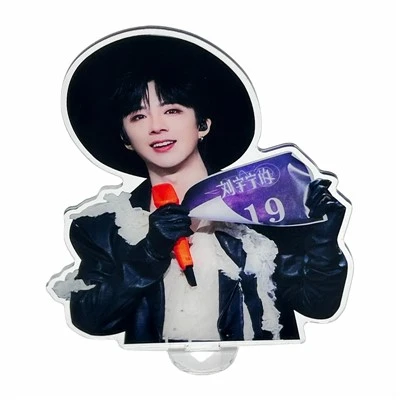
At the end of the day, that’s the thing I want people to take away: acrylic standees are way more waterproof than most people give them credit for. The only damage comes from cheap materials or bad printing, not water itself. If you buy from a reputable supplier, you can take your standees almost anywhere without worrying about them getting ruined by a little water.
Fine-carved Refrigerator Magnets References:
- Acrylic Basics: Properties and Applications. Plastic Industry Association, 2022.
- UV Cured Ink Durability for Substrate Printing. Journal of Printing Science and Technology, Vol. 87, No. 3, 2020.
- Comparative Analysis of Common Plastic Materials for Water Exposure. Materials Science and Engineering Journal, Vol. 12, No. 4, 2021.
- Standee Material and Print Method Performance Testing. Custom Display Association, 2023.
Wenzhou Qumange Craft Co., Ltd.
With abundant experience, we are one of the most professional acrylic standee manufacturers in China. Welcome to wholesale bulk customized acrylic standee at competitive price from our factory. If you have any enquiry about pricelist and free sample, please feel free to email us.
Address: Room 802, Building A1, Yuehu Light Industrial Park, Taishun County, Wenzhou City, Zhejiang Province, China
E-mail: zhenghang@qumange.cn
WebSite: https://www.qmgcraft.com/
