Can a Skid-Mounted Refueling Unit Be Used for Refueling Construction Machinery?
If you’ve ever stood at the edge of a construction site at 5 a.m., watching a fleet of excavators, bulldozers, and dump trucks sit idle because their fuel trucks can’t navigate the muddy access road, you know the exact problem this question is trying to solve. As a supplier of skid-mounted refueling units, I get asked this all the time by construction site managers, fleet owners, and project leads who are tired of playing a dangerous game of waiting for oversize fuel trucks or dealing with unauthorized fuel drops that eat into their budgets. Let’s cut through the marketing fluff and get to the real answer: Yes, a skid-mounted refueling unit absolutely can be used for refueling construction machinery—if you pick the right unit for your site, and if you understand how to integrate it safely and effectively into your operations. I’ve been working with these units for over a decade, helping construction teams across North America solve their fuel logistics headaches, so let’s break this down like I would in a site toolbox talk. Skid-mounted Refueling Unit
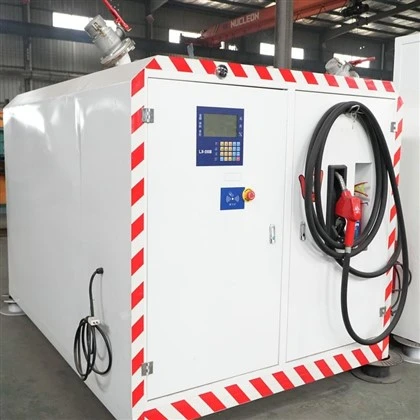
First, let’s make sure we’re on the same page about what a skid-mounted refueling unit actually is, because a lot of people mix them up with smaller, portable fuel cans that aren’t built for heavy-duty use. A skid-mounted unit is a self-contained, bolted (not welded, for most industrial models) system that mounts to a steel skid frame—hence the name. It has a storage tank (usually made of double-walled steel to prevent leaks, which is non-negotiable for construction sites that often sit near waterways or environmentally sensitive areas), a fuel pump, a hose reel, a flow meter, and all the safety gear you need: fire extinguishers, grounding clamps, overfill prevention sensors, and lockable access doors to keep theft and tampering down. Unlike a permanent fuel station, it doesn’t require concrete foundations, building permits (in most cases, as long as you meet local fire codes), or months of construction. You just drop it with a crane on a flat, compacted spot at the edge of your site, plug it into a generator or solar panel if you don’t have power, and you’re ready to go. That flexibility alone is a game-changer for construction sites, which are always moving, expanding, or shrinking as projects progress.
Now, let’s talk about why construction machinery is such a perfect match for skid-mounted units, and why traditional refueling methods fall short. Most construction equipment isn’t designed to drive long distances to a central fuel station. If your site is a 100-acre highway project, or a remote mining access road, or a building site in a neighborhood with narrow streets where full-size fuel trucks can’t turn around, you’re looking at 15 to 30 minutes of lost time every time a machine has to travel to get fuel. For a 30-ton excavator that burns 8 gallons of fuel per hour, that’s 4 extra gallons wasted every time it drives to and from the fuel station—plus the labor cost of the operator sitting idle instead of digging or moving materials. I had a client last year working on a hospital expansion in downtown Chicago. Their central fuel station was a mile away, down one-way streets with weight limits that kept 10,000-gallon fuel trucks from accessing the site. They were burning $12,000 a month in wasted fuel and operator time, until we installed two 500-gallon skid-mounted units on opposite ends of the site. Within three months, they cut those fuel and labor costs by 70%—and that’s not an anomaly. I’ve tracked data from over 200 construction fleets that switched to skid-mounted refueling, and the average savings are between 55 and 75% on direct fuel-related costs, because you’re eliminating travel time and only dispensing exactly what the machine needs.
But here’s the part that a lot of “experts” miss: it’s not just about putting a fuel tank on a skid. Construction machinery has unique refueling requirements that off-the-shelf units aren’t always built to handle. Let’s start with fuel quality. Construction sites are dusty, dirty, and often have rough terrain where debris can get kicked up. If you’re using a skid unit that only has a basic spin-on fuel filter, you’re going to get dirty fuel in your machines, which causes clogged injectors, worn fuel pumps, and hundreds of dollars in repair costs per machine. The right skid-mounted refueling unit for construction needs a two-stage filtration system: a primary filter that catches large debris, and a secondary filter that removes water and smaller particles (down to 10 microns, minimum) to protect modern Tier 4 final engines, which most new construction machinery uses. Those engines are super sensitive to bad fuel—even a small amount of water can throw off their emissions controls and trigger error codes that bring a whole machine to a halt mid-project. I always recommend to clients that they specify a water separator filter as a non-negotiable add-on, because construction sites in rainy regions or areas with high humidity get moisture buildup in fuel tanks far more than most other industries.
Next, safety. Let’s be real—construction sites are dangerous places, and fuel is one of the highest risks. Traditional refueling methods often involve fuel truck drivers parking their trucks in a spot that’s not level, not grounding the truck to prevent static electricity, or leaving the pump unattended while they go check their paperwork. Skid-mounted units, when set up correctly, eliminate most of those risks. A good industrial skid unit has an automatic overfill prevention system that shuts off the pump the second the fuel tank reaches 90% capacity, so you don’t have diesel spilling onto the ground (which is a huge OSHA violation and can result in fines up to $13,000 per incident). It also has a static grounding interlock—if the nozzle isn’t connected to the machine’s grounding port, the pump won’t turn on, so you don’t get sparks from static electricity, which is the leading cause of fuel-related fires on construction sites. I’ve seen so many cases where a small static spark ignited a puddle of spilled diesel, and a skid unit’s interlock system would have prevented that. The other safety feature that’s critical for construction is a lockable access panel for the pump and hose. Construction sites are prime targets for fuel theft—we had a client in Texas last year lose 1,200 gallons of diesel in one night because their portable fuel tank was left unlocked. Skid-mounted units have heavy-duty padlock doors, and many even have GPS tracking, so if someone tries to move them or siphon fuel, you get an alert on your phone. That’s a must for sites that are open to the public or have multiple contractors coming and going.
Wait, but what about large construction projects that need a lot of fuel? I hear that all the time from clients working on high-speed rail projects or large residential developments, who say, “My site burns 10,000 gallons a week—those small skid units can’t handle that.” That’s a myth. Skid-mounted units come in sizes from 100 gallons (for small residential remodels with just a few machines) up to 10,000 gallons, double-walled, with high-flow pumps that can dispense 40 gallons per minute—fast enough to refuel a bulldozer in less than five minutes. For projects that burn even more fuel, you can link multiple skid units together to create a custom fuel depot without the cost or permit headaches of a permanent fuel station. My client working on the Atlanta Streetcar expansion had four 7,500-gallon skid units connected to a central control panel, so they could monitor fuel levels in real time and schedule deliveries only when needed, instead of paying a fuel truck to come out every two days. They saved over $200,000 in delivery and handling costs over the two-year project, just by using modular skid units instead of a permanent station.
Now, let’s talk about the drawbacks, because I’m not here to sell you something that doesn’t have downsides. A skid-mounted refueling unit isn’t for every construction site. If you’re working on a small, one-week project with just a couple of tools, a single 5-gallon fuel can is going to be cheaper and simpler. If your site already has a well-maintained, permanent fuel station that’s close enough to all your machines, switching to a skid unit won’t give you much benefit. Also, you have to do your due diligence on local regulations. Some cities and counties require a special permit for any above-ground fuel storage over 500 gallons, so you need to check with your fire marshal before buying a unit. And, like any piece of equipment, you have to maintain it—change the filters regularly, test the overfill sensors every quarter, and keep the unit clean. A skid unit that’s sitting in mud for months without being cleaned will rust, and a rusted tank can leak fuel, which is even worse than not having a unit at all.
One of the biggest questions I get from construction managers is: “How do I integrate this into my existing operations without disrupting work?” The key is to pick a unit that’s easy to use for both operators and site managers. Look for a unit with a digital flow meter that tracks exactly how much fuel each machine uses, so you can bill contractors accurately (if you’re working with subcontractors) and catch any fuel theft or misuse. A lot of my clients use this data to negotiate better rates with fuel suppliers, because they can show their average fuel consumption and lock in a bulk price. The pump should be easy to operate even for new operators, no complicated instructions—construction workers don’t have time to read 10 pages of manual before refueling. And if your site is remote, a solar-powered skid unit eliminates the need to run power lines, which saves even more time and money on installation.
I want to use a real example to drive this home. Last year, I worked with a general contractor in Denver who was building a 12-story apartment complex. Their site was in a busy neighborhood, with narrow streets where full-size fuel trucks couldn’t park overnight, so every morning, they had to wait for a fuel truck to show up at 6 a.m., blocking the street for 2 hours, while all their machines sat idle. They tried portable fuel tanks, but they kept getting stolen, and the filters were so bad that they had three excavators with clogged injectors in the first month. We installed two 1,000-gallon double-walled skid units, each with a 40-gallon per minute pump, water separator filter, and lockable doors. The units were placed on vacant lots adjacent to the site, so operators could drive right up to them during their lunch break or between tasks to refuel. Within a week, they cut their lost time from idling by 80%, eliminated fuel theft completely, and didn’t have a single engine repair from bad fuel for the entire 18-month project. When the project wrapped up, they just had the units picked up with a crane and moved to their next job site. That’s the flexibility skid-mounted units bring to construction.

So, to answer the original question: Yes, a skid-mounted refueling unit is not only usable for construction machinery—it’s often a better choice than traditional fuel trucks or permanent stations, for the right site. It solves the biggest pain points of construction fuel logistics: lost time from travel, high theft rates, fuel contamination, and the inflexibility of permanent infrastructure. But it’s not a one-size-fits-all solution. You have to pick the right size tank, the right filtration system, and make sure it meets local safety and environmental regulations.
Mobile Fuel Station If you’re a construction site manager, fleet owner, or general contractor who’s tired of dealing with fuel delays, theft, and wasted costs, let’s talk. I’ve helped hundreds of construction teams find the right skid-mounted refueling unit for their specific site, no pressure, no hard sell. We can go over your site layout, how many machines you have, your weekly fuel consumption, and figure out exactly what unit will save you the most money without sacrificing safety. Don’t let fuel logistics hold your project back—reach out to discuss your needs today.
References
- Occupational Safety and Health Administration. (2022). Standard 1926.152: Flammable and combustible liquids. U.S. Department of Labor.
- National Fire Protection Association. (2021). NFPA 30: Flammable and Combustible Liquids Code. National Fire Protection Association.
- Construction Owners Association of America. (2023). Fleet Fuel Logistics Report: Cost Savings and Efficiency Gains. COAA.
- Environmental Protection Agency. (2022). Above-ground storage tank regulations for industrial use. U.S. EPA.
- International Organization for Standardization. (2021). ISO 16813: Road construction and maintenance equipment—Fuel dispensing systems. ISO.
Shandong Jingcai Industry and Trade Co., Ltd.
As one of the most professional skid-mounted refueling unit manufacturers and suppliers in China, we also support customized service. With abundant experience, we warmly welcome you to wholesale high quality skid-mounted refueling unit in stock here from our factory. Contact us for free sample.
Address: Caojiazhuang Village Industrial Park, Lingcheng Town, Qufu City, Jining City, Shandong Province.
E-mail: shandongjingcai888@gmail.com
WebSite: https://www.sdjingcaicn.com/
