When I was first tasked with heading the detector module product line at my company three years ago, I spent a week on customer visits hearing the same frustrated refrain: “Your module works great in our lab, but it can’t hold up on our production line.” It’s a complaint that comes with the territory of supplying detector modules to aerospace, semiconductor manufacturing, and medical imaging teams—teams whose entire processes depend on consistent, reliable detection. That experience taught me that delivering a quality product isn’t just about building a device that can count photons or detect radiation in a controlled environment. It means adhering to the international standards that turn a component into a workhorse that customers can trust to perform, whatever the environment throws at it. Today, I want to break down exactly what those international standards are, why they matter for both us as a supplier and our customers, and how we integrate them into every detector module we ship. Detector Module
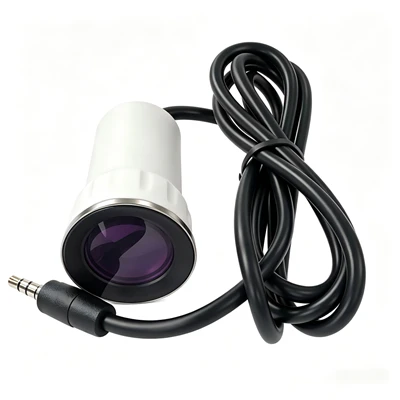
Let’s start with the core purpose of a detector module: it’s a specialized component that translates a physical input—X-ray, gamma radiation, particle flux, even low-light photons—into a usable electrical signal. For the uninitiated, that might sound straightforward, but for industries like computed tomography (CT) scanning, wafer inspection, or satellite payloads, a 1% deviation in signal linearity can mean thousands of dollars in wasted material, a misdiagnosis in a medical setting, or a failed satellite mission mid-deployment. That’s why international standards exist: to eliminate ambiguity, establish measurable benchmarks, and create a shared language between component suppliers and end-users around the world.
The first set of standards we rely on comes from the International Electrotechnical Commission (IEC), specifically the IEC 61326 series, which governs electrical equipment for measurement, control, and laboratory use. For detector modules, this isn’t just a box to check—it’s a requirement. IEC 61326 covers electromagnetic compatibility (EMC), which determines how a device operates in the presence of electromagnetic interference (EMI) from other equipment, and how it emits interference that could disrupt nearby devices. Early in our production, we once had a customer who returned a batch of modules because their performance dropped when connected to a factory’s high-voltage power lines. We traced the issue to our module’s unshielded cabling, which picked up ambient EMI. That mistake pushed us to update our manufacturing process to enforce IEC 61326 Class A (for industrial environments) across all our detector modules today. Now, every unit undergoes EMC testing in our in-house lab before it leaves our facility, and we keep detailed test reports for every shipment—something our customers value because it lets them integrate our modules without costly reworks in their own systems.
Another critical IEC standard for our industry is IEC 62304, the standard for medical device software life cycle. Even though not all our modules are for medical use, any module that integrates embedded software for signal processing (which most modern ones do) must meet this standard for medical applications. For example, the X-ray detector modules we supply to a regional hospital chain had to pass IEC 62304 to be approved for their new CT scanners. This standard governs every step of software development: requirements gathering, design, testing, maintenance, and risk management. We work closely with our software engineering team to document every code change, run regression tests, and conduct hazard analysis to ensure our modules don’t pose a risk to patient safety. That’s a responsibility we take seriously, and it’s why IEC standards are non-negotiable for us.
Moving beyond electrical and software standards, we also adhere to ISO 9001, the international standard for quality management systems. As a detector module supplier, ISO 9001 isn’t just about having a certification on our wall—it’s about building consistency into every part of our process. We’ve had customers who order 10 modules one quarter and another 100 the next, and they expect the exact same performance from both batches. ISO 9001 requires us to track every component that goes into a module—from the photodiodes to the power supplies—so we can trace a defect back to its source if one arises. Last year, a customer reported a batch of modules with slightly higher noise levels than their specification. Using our ISO 9001 traceability system, we identified that a single batch of preamplifiers from a supplier had a minor manufacturing defect, and we were able to replace the affected units within 48 hours, minimizing downtime for the customer. That level of reliability is exactly what customers look for in a detector module supplier, and it’s all rooted in the rigor of ISO 9001.
For industries that operate in harsh environments—think aerospace, oil and gas, or deep-sea exploration—another set of standards comes into play: environmental testing standards from IEC and ASTM International. IEC 60068-2 is a series that defines environmental testing, including temperature cycling, vibration, shock, and humidity resistance. Our detector modules for satellite payloads, for example, must pass IEC 60068-2-1 (cold testing), IEC 60068-2-2 (dry heat testing), and IEC 60068-2-6 (vibration testing) to survive launch conditions, which can involve temperatures ranging from -55°C to 125°C and extreme mechanical stress. We also use ASTM E595, the standard for outgassing in space environments, to ensure our modules don’t release volatile organic compounds that can contaminate satellite optics or sensors. These standards don’t just protect our customers’ investments—they let us stand behind our products in the harshest conditions on Earth and beyond.
It’s important to note that international standards aren’t one-size-fits-all, and we tailor our approach based on the application of each detector module we produce. For example, a detector module used in a semiconductor wafer fab requires adherence to SEMI standards (Semiconductor Equipment and Materials International), specifically SEMI E10, which defines performance and reliability specifications for measurement and inspection equipment. Wafer inspection equipment operates in cleanroom environments with strict particle contamination rules, so SEMI E10 requires our modules to meet cleanliness standards that IEC standards don’t cover in the same detail. That’s why we work closely with each customer to map their specific requirements to the right set of standards before we begin production. A good supplier doesn’t just know the standards—they know how to apply them to solve a customer’s unique problem.
Over the years, I’ve seen first-hand what happens when a supplier cuts corners on international standards. A few years ago, we lost a large medical device contract to a competitor who offered a lower-priced detector module. The competitor didn’t adhere to IEC 62304, and their modules failed a third-party safety test, leading to a product recall and a multi-million dollar loss for the device manufacturer. That experience reinforced that international standards aren’t just regulatory hoops—they’re a guarantee of quality, safety, and reliability that builds long-term trust between supplier and customer. As a detector module supplier, that trust is our most valuable asset, and every standard we follow is a promise to our customers that they can count on our products when it matters most.
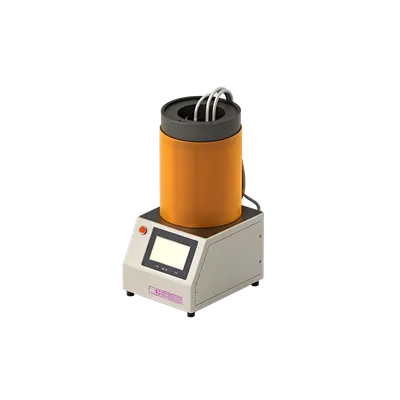
If you’re in the market for a detector module that meets all the relevant international standards for your application, or if you have questions about how our modules integrate with your current systems, we’re here to help. Our engineering team has decades of experience working with IEC, ISO, SEMI, and ASTM standards across industries, and we can provide detailed test reports, compliance documentation, and custom configurations to meet your specific needs. Whether you’re looking to upgrade a medical imaging system, improve wafer inspection accuracy, or build a satellite payload, we can partner with you to deliver a detector module that meets and exceeds the international standards for your use case.
Module References
- International Electrotechnical Commission. (2020). IEC 61326-1: Electrical equipment for measurement, control and laboratory use – EMC requirements – Part 1: General requirements.
- International Electrotechnical Commission. (2019). IEC 62304: Medical device software – Software life cycle processes.
- International Organization for Standardization. (2015). ISO 9001: Quality management systems – Requirements.
- International Electrotechnical Commission. (2018). IEC 60068-2: Environmental testing – Part 2: Tests.
- ASTM International. (2021). ASTM E595: Standard test method for total mass loss and collected volatile condensable materials from space materials.
- Semiconductor Equipment and Materials International. (2020). SEMI E10: Specification for measurement and inspection equipment.
UVLEDTEK Group
As one of the most professional detector module manufacturers and suppliers in China, our products have good reputation in the market. Please rest assured to buy high quality detector module at competitive price from our factory. For more information, contact us now.
Address: Huangshi Industrial Zone, Putian City, Fujian Province, China
E-mail: info@uvledtek.com
WebSite: https://www.uvledtek.com/
