What are specialty gases? Let’s cut the jargon and break this down straight—since I’m the guy who ships these things every week, I don’t throw around fancy terms unless they actually matter. Specialty Gases

First off, no, they’re not just “fancy gases” you’d see in a sci-fi movie (though some do sound like it). They’re not the oxygen in your scuba tank or the nitrogen in your beer keg, either. Specialty gases are a narrow, specific category of industrial gases made for super precise, hyper-specialized uses. Think of them as the “precision tools” of the gas world—way more tailored than the generic stuff. Most people I talk to mix ’em up with standard industrial gases, so let’s clear that up right now: standard is bulk, low-purity, meant for big, general jobs (like welding or blanketing a tank). Specialty is high-purity (often 99.99% or higher, sometimes 99.99999% for ultra-sensitive work), mixed in exact ratios, or both—made for jobs where even a tiny impurity (like a few parts per million) can totally mess up the whole process.
Now, let’s talk about what makes a gas “specialty” in the first place. It’s not the element itself—you can have a specialty version of nitrogen, helium, even carbon dioxide. The key is two things: purity level and intended use. Regular nitrogen is cheap, pumped in big tanker trucks for keeping food fresh or inerting chemical tanks. But specialty nitrogen? That’s the kind we bottle in small, sealed cylinders for semiconductor manufacturing—where a single speck of contamination can ruin a $10,000 silicon wafer. Same gas, totally different game. And then there’s specialty gas mixtures, which are a huge part of what we do. Like, if a lab needs a mix of argon and carbon dioxide in exactly 90/10 proportions for calibrating a gas detector, that’s specialty. You can’t just mix ’em up in a bucket; we do it in controlled, pressurized cylinders with analytical checks to make sure every last percentage is spot-on.
Who uses these things? Let’s run through the industries we deal with every day, because that’s where specialty gases actually do the heavy lifting. Semiconductor manufacturing is the big one right now—computer chips? They rely on gases like neon, krypton, and xenon (all specialty) for etching circuits and depositing thin films. Back when the chip shortage hit a few years ago, we were scrambling to get supply to our tech clients because even a delay in specialty gas shipments shut down their whole factories. Then there’s medical—think anesthesia gases, or the calibration gases for blood analyzers, or even the gaseous oxygen that’s highly filtered for use in specialty respiratory equipment. We work with hospitals and medical device makers on that stuff; they can’t afford a bad batch, so we run extra tests on every cylinder.
Environmental monitoring is another huge area. Places that track air quality, test water for pollutants, or check emissions from factories all need specialty calibration gases. Like, if a state environmental agency needs to test if their air sensors are reading CO correctly, they use a certified CO standard gas—way purer than the CO you’d get from a welding supply store. And that’s not just for government agencies; auto makers use specialty gases to test tailpipe emissions too, since every new car has to meet super strict standards.
Then there’s research and development—university labs, pharmaceutical companies, even aerospace. For example, NASA uses specialty helium for leak-checking rocket parts, and drug makers use specialty oxygen and nitrogen for fermenting drugs. We even supply some craft breweries with specialty CO2 mixes for specific beer styles—though that’s a side gig, not our main focus.
Wait, let’s get into the different types, because not all specialty gases are the same. There’s pure specialty gases—single-element, ultra-pure, no extra stuff. And then there’s specialty gas mixtures, which split into two main types: calibration mixtures and process mixtures. Calibration mixtures are for checking that other instruments are right—think of a scale with a known weight; that’s exactly what these are for gas detectors, air sensors, etc. Process mixtures, though, are used as a material in the manufacturing process itself—like that 90/10 argon-CO2 mix we mentioned for welding certain metal alloys, or the mix used to make flat-screen TVs.
Here’s the part that people rarely ask about: why does purity matter so much? Let’s say you’re making a semiconductor wafer—even 1 part per million of water vapor in the specialty gas can leave a defect on the wafer, and that means the whole thing gets thrown out. For calibration gases? If there’s an impurity in the mix, your air sensor will read wrong, which could lead to a factory accidentally emitting too much pollution. For medical gases, impurities can make a patient’s treatment dangerous. That’s why we test every single cylinder before it leaves our warehouse—we use gas chromatographs and other lab gear to verify purity and ratio, so our clients never have to worry.
Now, let’s talk about how we supply these, because it’s not just dropping a cylinder off. Specialty gases can be tricky—some are toxic, some are flammable, some are super reactive. For example, silane, which we use in semiconductor manufacturing, is explosive if it mixes with air. So we store those in special, pressure-rated cylinders, handle them in climate-controlled spaces, and train our drivers on hazmat protocols that go way beyond standard industrial gas delivery. We also work with clients on cylinder sizes—some labs only need a small 1-liter cylinder for a one-time test, while a semiconductor factory might need a 200-liter cylinder they swap out every week.
A common mistake people make is thinking specialty gases are only for big companies. No—we have small clients too, like tiny environmental testing labs or start-up biotech firms that can’t afford to keep a huge gas inventory. We do custom mixes for them too; if a lab needs a mix of 0.5% methane in nitrogen, or something even more specific, we can make it. That’s the thing about being a specialty supplier—we don’t just sell you off the shelf; we work with you to get exactly what you need, no generic products.
Wait, let’s clear up another mix-up: specialty gases aren’t the same as “rare gases.” Sure, some specialty gases (like neon, krypton) are rare, but others—like nitrogen, oxygen, argon—are super common. It’s all about how they’re processed and used. The rare stuff just costs more, but that’s because it’s harder to extract and purify to the standards clients need.
If you’re reading this and you’re not sure if you need specialty gases, here’s a quick check: do you have a process or a test where even a small error or impurity would cause a problem? If yes, you probably do. A lot of our clients come to us because their previous gas supplier gave them the wrong stuff, or the purity was off, and it cost them time or money. That’s why we prioritize consistency—we’ve been in this business long enough to know that trust is everything.
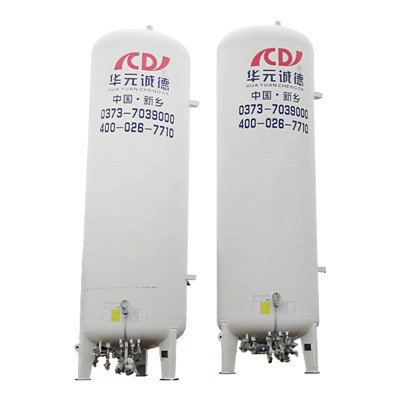
At the end of the day, specialty gases are the unsung heroes of modern industry. You won’t hear about them in the news unless there’s a shortage, but they’re in every phone, every car, every medical device that keeps people healthy. As a supplier, our job is to make sure those gases get to you on time, exactly as specified, no surprises. If you’re working on a project where you need reliable, high-purity specialty gases—whether it’s a custom mix, a calibration standard, or bulk pure gas—hit us up to talk through your needs. We don’t do one-size-fits-all here, and we’re happy to walk you through what you actually need, no sales pitch required.
Type Of Air Separation Unit References:
- Compressed Gas Association. (2021). "Specialty Gases: Definitions and Industry Standards." CGA Handbook of Compressed Gases, 5th Edition.
- International Organization for Standardization (ISO). (2019). "ISO 14912: Gas analysis—Calibration gas mixtures for gas-measuring devices." ISO Central Secretariat.
- Semiconductor Industry Association. (2022). "Critical Specialty Gases in Semiconductor Manufacturing: Supply Chain Challenges." SIA Tech Brief.
- U.S. Environmental Protection Agency (EPA). (2020). "Calibration Gases for Ambient Air Monitoring: Quality Assurance Guidelines." EPA Report No. EPA-454/R-20-002.
Xinxiang Jiale Intelligent Equipment Co., Ltd.
As one of the leading specialty gases manufacturers and suppliers in China, we also support customized service. Please feel free to buy high quality specialty gases for sale here from our factory. Contact us for more details.
Address: No.3913, 9th Floor, Unit 3, East Commercial and Office Complex, Baolong City Plaza, Hongqi District, Xinxiang City, Henan Province, China
E-mail: cc2397410@gmail.com
WebSite: https://www.jialeasu.com/
