Hey there, if you’re here hunting for a plastic bottle mold that fits your production needs, you’ve probably stared at two big options: single-cavity molds or multi-cavity molds. As a plastic bottle mold supplier, I get it—this choice isn’t just about what “works” on paper; it’s about your daily grind, your budget, and scaling when you need to. I’ve seen customers pick the wrong one out of curiosity or a bad tip, and that leads to headaches: missed deadlines, wasted plastic, or even lost clients. So let’s break this down like we’re chatting at a trade show booth, not giving a textbook lecture. No stuffy jargon, I promise. Let’s get into it. Plastic Bottle Mold
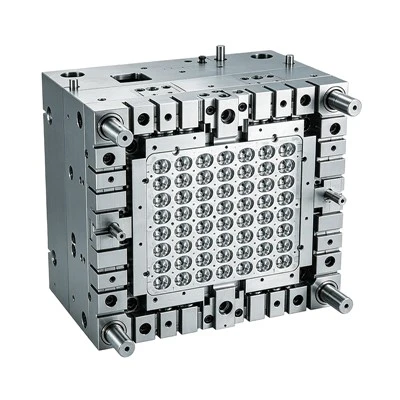
First, let’s talk basics, because not everyone who’s asking this has 10 years of molding experience. A single-cavity mold makes exactly one bottle per injection cycle. That’s it—each time your molding machine fires, you get one bottle. A multi-cavity mold? It has 2, 4, 8, even 16 or more cavities, so you make that many bottles in the same cycle. Simple enough, right? But the differences run way deeper than just how many bottles come out each time. Let’s start with the big one most people care about: production speed and volume.
If you’re a small to mid-sized operation, or testing a new bottle design, single-cavity is usually the way to go. Wait, let me give you a real example. Last year, a craft soda brand reached out to me. They were launching a limited-edition 12oz sparkling water in local grocery stores—their total run was only 50,000 bottles, and they needed to tweak the shape (slightly rounded shoulder, not the sharp one they’d mocked up) because their target audience hated sharp edges. They didn’t want to sink $20k into a multi-cavity mold that would make 16 bottles per cycle when they only needed a small batch. Single-cavity let them test and adjust the design fast. Their cycle time? Around 12 seconds per bottle, so 50k bottles would take about 167 hours—way less than if they were waiting for a multi-cavity to set up and debug.
Multi-cavity, on the flip side, is for when you need massive volume. Think big beverage brands, personal care giants, someone making 1 million+ bottles a month. Let’s say a brand selling 2-liter soda bottles. They’re not testing a new shape; they know exactly what works, they have steady monthly demand of 5 million bottles. An 8-cavity mold would cut their cycle time per bottle almost in half—wait, not exactly per bottle, but total output. One cycle: 8 bottles, 15 seconds. So in an hour, that’s 1,920 bottles. A single-cavity would do 300 per hour. Do the math: 5 million bottles on single-cavity would take over 550 hours, on 8-cavity it’s like 70 hours. That’s a no-brainer for volume. But here’s the catch—you can’t just buy a 16-cavity mold and expect it to work. More cavities mean you have to make sure the plastic resin flows evenly to every single one. If even one cavity is off, you’re wasting plastic and messing up production. I’ve seen a customer drop $50k on a 12-cavity mold, and they spent 3 months debugging because the middle cavities were getting too little resin, leading to weak bottles that leaked. That’s the kind of headache multi-cavity brings.
Next up, cost—this is probably the second biggest question, after volume. Let’s be real, no one wants to overspend, especially when margins are tight. Single-cavity molds are way cheaper upfront. Let’s say a standard 500ml water bottle single-cavity mold runs around $2,500-$3,500. A matching 8-cavity mold? That’s $12,000-$15,000. Wait, that’s 4-5x the cost, but you’re getting 8x the output. So if you’re doing that big volume, the multi-cavity pays for itself fast. But if you’re doing that small craft soda batch, dropping $12k on a mold that you’ll only use once for 50k bottles? That’s a dead investment. You’d also have extra costs: more machine pressure, more resin waste during setup, more maintenance. Single-cavity is cheaper to repair, too—if one cavity breaks, you only fix that one, not 8 or 16. I had a customer last month who ran a single-cavity mold for a year, and when the core pin wore out, it cost $150 to replace. Another customer with a 10-cavity mold had a core pin go out, and they had to remove all 10 cores to access it, so the repair was $800 plus downtime—way more expensive.
Then there’s design flexibility, which is something a lot of people sleep on. If you’re constantly updating your bottle design—like cosmetic brands that change labels or shapes every few months, or small food brands that tweak their packaging to stand out—single-cavity is way easier to modify. Let’s say you want to adjust the height of the bottle by 10mm, or change the neck to fit a new cap. On a single-cavity mold, you can just swap out the core or the cavity insert in an hour, no big deal. On a multi-cavity mold? You have to modify every single cavity insert. If you have 12 cavities, that’s 12 parts to swap, align, and test. That adds hours of work, higher labor costs, and a bigger chance of misalignment leading to bad bottles. I work with a skincare brand that updates their serum bottle design quarterly—they’ve been using single-cavity molds for 3 years, and they can turn around a design change in 2 days, whereas their competitor uses multi-cavity and takes a week. That’s a huge advantage for them when they need to hit a launch deadline.
Wait, but multi-cavity isn’t all bad when it comes to design, right? Only if the design is stable. If you have a bottle that’s super consistent, no plans to change it, multi-cavity can actually give you more uniform bottles. Because more cavities mean the pressure and temperature are spread more evenly across all parts—wait, no, only if the mold is built correctly. If a multi-cavity mold is precision-machined, every single bottle will be almost identical, right down to the wall thickness. That’s perfect for brands that need every bottle to fit exactly the same on their filling line, no jams, no rejects. I recently delivered an 8-cavity mold to a bottled water brand that uses automated filling lines. They said before, they had a 2% reject rate with their old 4-cavity mold because of uneven wall thickness; the new 8-cavity, built with tight tolerance, brought that reject rate down to 0.3%. That’s a game-changer for their operational efficiency.
Now let’s talk about machine compatibility, which is a detail that trips up even experienced buyers. You can’t just plug any mold into any molding machine, right? Single-cavity molds are smaller, so they fit on smaller, cheaper molding machines. If you’re just starting out, and you have a $50k machine, a single-cavity mold works fine. Multi-cavity molds, especially high-cavity ones, are bigger, and they need machines with higher clamp force and higher injection pressure. That’s because you’re injecting more plastic at once, so you need enough pressure to fill all cavities. I had a customer who bought a 16-cavity mold without checking his machine’s specs. He thought it would work, but his machine only had 100 tons of clamp force, and the multi-cavity needed 140. He had to rent a bigger machine for his runs, which added $2,000 a month to his costs for 6 months. That’s a mistake no one wants to make. Single-cavity is way more forgiving here—they work on most standard molding machines, so you don’t have to upgrade your equipment right away.
Wait, what about waste? Plastic is expensive, no one wants to throw it away. Single-cavity has less startup waste, right? Because you can run the cycle slower when you’re setting up, adjust pressure gradually, so you don’t get a whole bunch of bad bottles. With multi-cavity, you have to get all cavities filling at the same time, so you’ll have more startup waste—like 50-100 bad bottles when you’re debugging the mold. Single-cavity startup is usually 5-10 bad bottles, way less waste. But over time, if production is steady, multi-cavity’s waste per bottle is lower because it’s more efficient, as long as it’s set up right. Let’s say a 1 million bottle run: single-cavity has 0.5% waste (5,000 bottles), multi-cavity has 0.2% (2,000 bottles). So multi-cavity wins here, but only if you’re running that big of a batch. For 50k bottles, single-cavity’s 0.5% is 250 bottles, multi-cavity’s 2% startup plus 0.2% steady is like 1,100 bottles—way more waste.
Let’s also talk about lead times. If you need a mold fast, single-cavity is your guy. Most of the time, I can get a single-cavity custom mold built and shipped in 4-6 weeks. Multi-cavity molds take longer, because there are more parts to machine, more alignment to do, more testing. An 8-cavity mold might take 8-10 weeks, a 16-cavity could take 12 weeks. That’s a big difference if you’re launching a product for a holiday, or you have a last-minute order from a big client. I had a customer last year who got a last-minute order for 100k holiday-themed soda bottles, and he needed the mold in 5 weeks. We built a single-cavity holiday-specific mold for him, and he hit his deadline, no problem. If we’d had to build a multi-cavity, he would’ve missed the holiday window, and lost the order.
But here’s the thing: it’s not an either-or forever. A lot of brands start with single-cavity, then scale up to multi-cavity when their demand grows. That’s the smart move, in my opinion. Start small, test your product, build your customer base, then when you have steady monthly volume, upgrade to multi-cavity to save on long-term costs. I had that craft soda brand I mentioned earlier—they used single-cavity for their first run, which was 50k bottles, sold out in 2 months, and now they’re doing 500k bottles a month. Last month, they ordered an 8-cavity mold from me, and they said it’s doubling their output, and they’re saving $15k a year on resin and labor. That’s the perfect progression.
Wait, but I should mention the downsides of each, just so you have the full picture. Single-cavity’s big downside is low output for high volume. If you’re making 10 million bottles a month, single-cavity would take forever, and you’d need so many machines that your labor and overhead costs would skyrocket. Multi-cavity’s downsides are higher upfront cost, longer lead times, more complex maintenance, and less design flexibility. Also, if you have a mistake in the mold design, it affects all bottles, not just one. With single-cavity, if you mess up, you just fix one part, not 8.
Let me throw in a real-world example of a bad multi-cavity call vs a good single-cavity call. A few years back, a snack company that made 100k plastic containers for their granola bars tried to use a 12-cavity mold. They thought 12x the output would cut their costs, but their granola bar container had a slightly tapered shape, and the resin cooled unevenly across the 12 cavities, leading to containers that were too soft on the edges. They ended up with a 5% reject rate, and lost $10k in wasted plastic and missed deadlines. A similar granola brand nearby, making the same volume, used a single-cavity mold, had a 1% reject rate, and didn’t have to sink that much upfront cost. That’s the difference between picking the right mold for your actual needs, not what sounds good on paper.
So, how do you decide which is right for you? Let’s sum up the questions you need to ask: What’s your monthly production volume? Are you testing a new product or running a stable, high-volume line? Do you plan to change your bottle design anytime soon? What’s your budget upfront, and what’s your long-term growth plan? If you’re still not sure, that’s fine—we can chat through it, no pressure.
Here’s the thing, as a supplier: I don’t push multi-cavity molds just because they’re more expensive. I push whatever works for your business. Because if I sell you a $15k multi-cavity mold for a 50k bottle batch, you’ll never come back, right? I want you to be happy, order again, maybe upgrade when you’re ready. That’s how we do things here, no sleazy sales tactics, just real advice.

If you’re in the market for a new plastic bottle mold, or you’re ready to upgrade from single to multi, feel free to reach out. We can talk about your volume, your design, your timeline, and I’ll give you a clear breakdown of costs, lead times, and what makes the most sense for you. No fine print, no hidden fees, just a mold that works for your business.
Plastic Bottle Mold References:
- Injection Molding Magazine. (2022). "Cavity Count Selection for Plastic Packaging Molds". Industrial Publishing Inc.
- Society of Plastics Engineers (SPE). (2021). "Design Guidelines for Single vs. Multi-Cavity Molds". SPE Packaging Division.
- Plastics Technology. (2023). "Economic Analysis of Mold Cavity Configurations for Small to Mid-Run Production". Gardner Business Media.
- Design News. (2022). "How Cavity Alignment Impacts Plastic Bottle Consistency". Informa Markets.
- Packaging World. (2021). "Scaling Production: From Pilot Runs to Mass Market with Mold Choices". PMMI Media Group.
Taizhou Koni Mould Co., Ltd.
As one of the most professional plastic bottle mold manufacturers and suppliers in China, we also support customized service. Please feel free to wholesale high quality plastic bottle mold made in China here from our factory. For pricelist, contact us now.
Address: No. 97 Jinju Road, Chengjiang Subdistrict, Huangyan District, Taizhou City, Zhejiang Province
E-mail: kn@kenimould.com
WebSite: https://www.kenimouid.com/
