If you’ve ever stared at a steel nut fast enough to hold together a bicycle frame, a construction crane joint, or even the engine of your car, chances are good that nut was cold forged. At our cold forged fasteners supply, we get asked all the time what exactly goes into turning a plain hunk of steel wire into that tiny, reliable component you depend on every day. It’s not just stamping and pressure—this is a precise, science-backed process that balances material science, tooling precision, and decades of on-floor experience to deliver a part that’s stronger, more consistent, and more cost-effective than anything made with traditional hot forging or machining. I’ve stood on our production floor every day for 12 years, watching this process repeat with every batch, and I’m here to walk you through it step by step, no fancy jargon, just the real work that makes the nuts you need. Cold Forged Fasteners
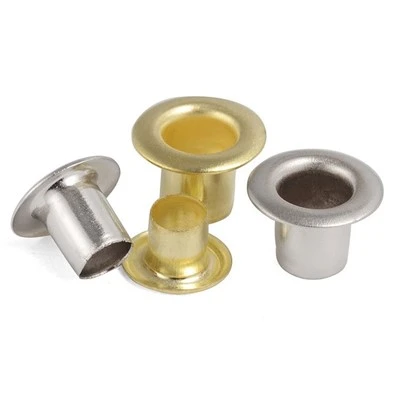
The process starts long before any metal touches a machine. Believe it or not, 90% of the quality of a cold forged nut is decided before the first blow of a hammer (or, more accurately, a cold forging press) happens. Our raw material isn’t just any steel wire—we source high-carbon low-alloy steel or alloy steel wire that’s been certified to exact chemical compositions, with tight tolerances on diameter and surface condition. Even a tiny scratch on the wire surface or a 0.005-inch difference in diameter can throw off the entire forging process, leading to defects like cracks or uneven threads later on. Before we accept a delivery, our quality team runs three checks: a chemical analysis to confirm the steel composition matches our specs, a surface inspection with a magnetic particle detector to catch hidden flaws, and a diameter check across every spool of wire to ensure consistency. We also size the wire to a precise diameter that’s 5-10% larger than the final nut’s body diameter—this extra stock is what allows the steel to flow into shape during forging, without leaving gaps or excess material.
Once we’ve confirmed the wire is perfect, it goes to the first step of the actual production line: cutting and preforming. This is where the wire is turned into small, uniform blanks called slugs. Our cutting machine, which runs at up to 150 strokes per minute, slices the wire into lengths that exactly match the volume of one nut. The key here is that we don’t use a sharp blade to cut—sharp cutting would stretch the metal and create tiny burrs or uneven ends, which would weaken the nut. Instead, we use a cold shear that applies controlled pressure to the wire, squeezing it until it fractures cleanly, resulting in a slug with a smooth, flat end and uniform density. After cutting, the slugs move to a preformer, which is a multi-station machine that shapes the rough slug into a more compact, ready-to-forge shape before the final forming step. Some people skip this preforming step, but for us, it’s non-negotiable: shaping the slug to match the internal geometry of the final nut cavity reduces the amount of pressure needed during the main forging blow, minimizes wear on our tooling, and ensures the steel flows evenly into every part of the nut, from the top flange to the edges of the hex body. For example, a standard M10 hex nut preform is shaped so that it has a slightly wider rim on one end, which will become the bearing surface that presses against the bolt or material later.
Next comes the core of cold forging: the main forging operation. This is where the magic happens, and where the process gets its name—we do all of this at room temperature, no heat applied to the steel. Unlike hot forging, which softens metal with heat and can create inconsistent grain structure, cold forging works by manipulating the metal’s molecular structure at ambient temperatures. When you apply extreme, controlled pressure to cold steel, the grains inside the material align along the shape of the part, creating a denser, stronger, more uniform structure than machined nuts, where the grain is cut and interrupted. That’s why cold forged nuts can handle higher torque and load than similar-sized machined parts. Our main forging press is a 200-ton multi-station transfer press, meaning each slug moves automatically through six different forming stations in a single, seamless cycle. The first station punches a hole through the center of the slug to create the nut’s bore—this is done with a precision punch pin that’s accurate to 0.001mm, because even a slightly off-center bore would make the nut cross-thread on a bolt. The second station shapes the hex body, pushing the steel into a precision-machined die cavity. The third and fourth stations refine the shape, smoothing the edges and ensuring the flange is flat and the height of the nut matches our specifications. We use high-speed steel dies that are hardened to 60 HRC (Rockwell hardness) to withstand the constant pressure—each die is machined in-house to our exact specs, because we’ve found that custom dies last longer and produce more consistent parts than off-the-shelf ones. During the entire forging process, we monitor the press force in real time: if a slug is slightly too big or too small, the press will stop automatically before it can damage the die or produce a bad part. This built-in quality check catches 95% of defects right on the line, so they never make it to the next steps.
After forging, the nut is still hot enough to handle? No, wait—since we did this cold, the only heat comes from the friction between the metal and the die, so the parts are room temperature. But they’re also what we call “work hardened” from the forging process. Work hardening makes them stronger, but it also makes them brittle, and they have a thin layer of oxide on the surface from the tooling. That’s why the next step is annealing and descaling. Annealing is a process where we heat the nuts to around 650 degrees Celsius, hold them there for a set amount of time, then slowly cool them down. This relieves the internal stresses built up during forging, making the nuts less brittle, and softens the surface enough for threading. It also improves the uniformity of the material, which is key for consistent thread quality. After annealing, the nuts have a thin layer of scale (iron oxide) on their surface, so we move them to a descaling bath—usually a mild acid solution, followed by a water rinse—to remove that scale without damaging the nut’s shape. We test the pH of the bath every two hours and check a sample of nuts for scale removal to ensure we don’t etch the metal, which would weaken the part.
Now we’re ready for threading, the most critical step for a nut’s function. A nut is only as good as its threads—if the threads are mismatched, rough, or off-pitch, the nut won’t tighten correctly, could cross-thread, or fail under load. We use two main threading methods for our nuts: thread rolling and thread cutting. Thread rolling is the method we prefer for 90% of our orders, because it creates stronger, more consistent threads than cutting. Here’s why: when you roll threads, you don’t remove any material from the nut—you press a die against the body of the nut, forcing the steel to flow into the thread shape, just like in cold forging. This aligns the grain structure of the metal along the threads, making them stronger than cut threads, which interrupt the grain. Thread rolling also produces smoother, more uniform threads, so the nut engages with the bolt more evenly, reducing friction during tightening. For specialized nuts, like fine-thread or custom-sized parts, we use thread cutting, which involves shaping the thread by removing excess material with a precision tool, but we only use this when thread rolling isn’t feasible. All of our threading dies are calibrated weekly, and we take random samples every hour to check thread pitch, diameter, and profile with a coordinate measuring machine (CMM)—this machine measures every part of the thread with accuracy down to 0.0005mm, so we can guarantee that every nut fits the bolt it’s designed for.
Once threaded, the nuts go to surface finishing and plating, which is not just for looks—it’s for corrosion resistance, hardness, and even appearance, depending on the application. We offer several common finishes: zinc plating for general-purpose indoor use, hot-dip galvanizing for outdoor or harsh construction environments, and mechanical plating for parts that need extra ductility to avoid hydrogen embrittlement (a big issue with high-strength nuts). Before plating, we do a degreasing step to remove any oil or residue from the production process, because even a tiny spot of oil will cause uneven plating. For zinc plating, we use a chromate conversion coating that comes in clear, yellow, or black, to protect the steel from rust for years. For high-strength nuts over grade 8, we strictly avoid electroplating with hydrogen, because it can make the steel brittle and cause failure under tension—instead, we use mechanical plating, which deposits the zinc without introducing hydrogen into the metal structure. We test every batch of plated nuts for corrosion resistance using a salt spray test: a sample is placed in a chamber sprayed with salt water, and we measure how long it takes for red rust to appear. For example, our hot-dip galvanized nuts for construction pass 1,000 hours of salt spray testing before any red rust forms.
The final step before shipping is full quality inspection and packaging. We don’t just rely on the in-line checks—every batch is 100% inspected for obvious defects like missing threads, cracks, or uneven hex bodies, and we pull a 5% sample for more rigorous testing: torque testing to ensure the nut can handle the required load, hardness testing to confirm it meets grade specifications, and pull testing to make sure the nut won’t strip when tightened. For aerospace or automotive grade nuts, we also do material traceability, keeping records of every raw material spool, every production run, and every test result, so we can trace any part back to its origin if needed. Once a batch passes inspection, it’s packaged in moisture-resistant bags, labeled with size, grade, and quantity, and stored in climate-controlled warehouses to prevent corrosion before it reaches our customers.

I’ve walked you through this process because it’s important to understand that a cold forged nut isn’t just a commodity—it’s a product of careful engineering, precision machinery, and hands-on expertise. The cold forging process we use creates nuts that are stronger, more consistent, and more reliable than any other type of fastener, which is why we supply to construction companies, automotive manufacturers, and aerospace teams across the country. If you’re looking for a cold forged nut for your next project, whether it’s a standard M6 for a small bicycle repair or a large heavy-duty nut for a construction crane, we have the capacity to fill your order, whether you need 100 pieces or 100,000. To discuss your specific requirements, or to request a quote tailored to your application, reach out to our team. We’re here to help you get the right fastener for the job.
Rivet References
Ashby, M. F., & Jones, D. R. H. (2012). Engineering Materials 2: An Introduction to Microstructures, Processing and Design. Butterworth-Heinemann.
Groover, M. P. (2020). Fundamentals of Modern Manufacturing: Materials, Processes, and Systems. Wiley.
Tschaetch, H., & Röttger, A. (2018). Cold Forging of Steel: Processes, Tools, and Materials. Springer.
Wuyuan Jieyi Automotive Electrical Appliance Co., Ltd.
As one of the most professional cold forged fasteners manufacturers and suppliers in China, we’re featured by quality products and good service. Please rest assured to wholesale bulk durable cold forged fasteners in stock here from our factory. We also accept customized orders.
Address: No. 7 Likeng Road, Industrial Park Wuyuan County, Shangrao City, Jiangxi Province
E-mail: wyjydqz@163.com
WebSite: https://www.wyjydq.com/
