Let’s cut right to the chase—if you’re here because you’re looking for axial flow fans for a warehouse, data center, greenhouse, or industrial process, you’ve probably stumbled on a dozen fan types, each making different claims about performance, reliability, and compliance. As someone who’s been supplying axial flow fans for 12 years—ever since I started out in a small workshop in the Midwest with a single metal brake and a prototype for a farm ventilation fan—I hear this question all the time: Are there actual standards axial flow fans have to follow, or is this just another marketing buzzword? The short answer is: yes, there are. And ignoring those standards isn’t just a risk for your bottom line—it could lead to safety hazards, failed audits, or even lost revenue from underperforming equipment. Axial Flow Fans

Let’s start with the most basic question: What is an axial flow fan, exactly? Unlike centrifugal fans that move air at a 90-degree angle, axial flow fans move air parallel to the axis of the blade, kind of like the fan in your desktop computer or the one on the back of a box truck. They’re ideal for moving large volumes of air at relatively low pressures—think exhausting hot air from a manufacturing line, cooling generators in a data center, or ventilating a 10,000-square-foot greenhouse in the winter. But because they’re so widely used across so many industries, standards aren’t one-size-fits-all. They’re tailored to the environment the fan will operate in, the safety requirements of the space, and the performance metrics you actually care about.
First, let’s talk about performance standards. If you’re buying a fan to move a specific amount of air (measured in cubic feet per minute, or CFM) at a specific static pressure, you can’t just go by the manufacturer’s sales sheet. For decades, the industry has relied on standards set by the American Society of Heating, Refrigerating, and Air-Conditioning Engineers (ASHRAE). ASHRAE Standard 51 is the big one here—it lays out exactly how to test a fan’s airflow, static pressure, power consumption, and efficiency in a controlled lab setting. Back when I first started in the business, we used to test every fan we shipped in our own small shop, but ASHRAE 51 gave us a universal set of rules so our customers could compare our fan’s performance to a competitor’s, no guesswork.
Wait, let’s be clear—this isn’t just a lab test. A few years ago, we had a customer in Ohio who installed two generic axial flow fans for his 50,000-square-foot cold storage warehouse. He told us his old fans were barely keeping the space at 38 degrees, so he spent $15,000 on two “high-CFM” fans from a discount supplier. Within three months, he was calling us panicking—his electric bill had jumped 22%, and the fans still couldn’t keep up. We sent one of our service techs to check it out, and he tested the fans on-site using the same method we learned from ASHRAE 51. Turns out, the discount supplier had advertised 20,000 CFM per fan, but actual performance was only 12,000 CFM at the static pressure his warehouse required. They’d run bigger blades on smaller motors, so they burned way more electricity just to move less air. That’s the problem with skipping standardized testing: you end up paying for a fan that looks good on paper but doesn’t do the job. ASHRAE 51 fixes that by requiring consistent, repeatable testing so performance claims are credible.
Next, there are safety standards—and these are non-negotiable, especially if you’re working in a hazardous environment. If your axial flow fan is going in a space with flammable fumes (like a chemical plant, paint booth, or grain elevator) or where dust could ignite (like a woodworking shop or feed mill), the National Electrical Manufacturers Association (NEMA) has a set of standards, and more importantly, the National Fire Protection Association (NFPA) sets rules for explosion-proof equipment. NFPA 70, the National Electrical Code (NEC), specifically classifies hazardous locations into divisions, and axial flow fans for these spaces have to meet strict requirements to prevent sparks. For example, the fan’s motor has to be totally enclosed, with no exposed wiring, and the blades have to be made of non-sparking material—usually aluminum or fiberglass, not steel, which can spark if it hits something.
I’ll never forget a call we got in 2019 from a manufacturing plant in Indiana. They had a grain dust explosion in one of their processing lines, and the investigation blamed their axial flow exhaust fan. The fan they’d installed was a cheap unit from a general supplier, not rated for a Class II Division 1 location, meaning it was in an area with combustible dust that could be ignited by a small spark from the motor. The plant had to shut down for three weeks to replace all 12 of their exhaust fans, and they ended up ordering our explosion-rated axial flow fans—all because they’d chosen cost over compliance. Now, that plant is one of our most loyal customers, and they send us referrals every time another location needs fans. That’s the thing about safety standards: they exist to keep people from making avoidable mistakes, not to make manufacturers’ lives harder.
Then there are industry-specific standards, because axial flow fans don’t operate in a vacuum. If you’re in agriculture, the American Society of Agricultural and Biological Engineers (ASABE) has Standard EP386 for agricultural ventilation fans. That covers everything from greenhouse ventilation to livestock barn cooling, and it takes into account the unique needs of those spaces—like humidity levels, animal comfort, and the specific demands of curing hay or grain. A greenhouse grower we work with in Michigan told us that before he started using our ASABE-rated fans, his tomato plants were getting blight because the old fans couldn’t keep air circulating evenly enough to prevent mold on the leaves. Our ASABE-rated axial flow fans are designed to move air slowly and evenly across plant canopies, and since he switched two years ago, his blight rate dropped by 70%, and his yield went up 18%. That’s not just a performance win—that’s an industry-specific standard addressing a problem general-purpose fan standards don’t cover.
For the data center industry, there’s another set of standards from the Telecommunications Industry Association (TIA)—TIA-942, which covers data center infrastructure, including cooling systems. Axial flow fans are a key part of the cooling units that keep servers from overheating, so TIA-942 requires them to be energy-efficient, reliable, and capable of operating 24/7 for years without failure. We supply axial flow fans to a handful of mid-sized data centers, and the engineering teams there tell us that standard is huge because downtime costs them thousands of dollars per minute. Our fans have a mean time between failures (MTBF) of over 100,000 hours, which is way above the minimum required by TIA-942. That means they don’t have to shut down servers to replace fans every few years, which saves them a ton of money.
Wait a second—are there any other standards? Oh, right, international standards, if you’re buying for a project outside the U.S. The International Organization for Standardization (ISO) has ISO 13349, which covers fans for general ventilation, and ISO 5801, which is similar to ASHRAE 51 for performance testing. If you’re in the EU, you’ll also need to comply with CE marking, which requires that your fan meets all relevant safety and environmental standards set by the European Commission. We’ve shipped axial flow fans to clients in Germany and France, and we make sure every fan we sell for export comes with the ISO and CE testing documentation they need to comply with local rules.
Now, I know what some of you are thinking: “Standards are just for big companies or regulated industries. I’m a small business owner with a warehouse—can’t I just buy a cheap fan and save money?” Sure, you can. But here’s the thing: over the life of a fan (which is usually 5 to 10 years), a standardized, efficient fan will save you way more in electricity and maintenance costs than a cheap, unrated fan. Let’s do a quick math example. A 48-inch axial flow fan: a standard, ASHRAE 51-tested fan uses about 1.5 kW of power at full speed, and runs 8,760 hours a year. That’s 13,140 kWh per year. At an average electricity rate of $0.12 per kWh, that’s $1,576 per year in electricity. A cheap, unrated fan of the same size might use 2.2 kW, so that’s 19,272 kWh per year, or $2,313 per year. Over 10 years, that’s a difference of over $7,000. And that’s not even counting the cost of repairs or replacement if the cheap fan fails early.
I’ve seen too many small business owners fall for the “low price, high CFM” trap. A few years ago, a guy who owned a auto body shop in Chicago called us because his spray booth fans were drawing too much power. He’d bought three $800 axial flow fans from a online marketplace, claiming to pull 10,000 CFM each. When we tested them, they only pulled 6,500 CFM, and each used 2.8 kW of power—almost double what our standard spray booth axial flow fans use. He ended up replacing all three with our fans, and his electricity bill dropped by $450 a month. He told us it was the best business decision he’d made all year.
So, how do you make sure the axial flow fan you’re buying meets the right standards? First, don’t take the manufacturer’s word for it. Ask for test reports that follow the relevant standard—whether that’s ASHRAE 51, NFPA, ASABE, or ISO. A reputable supplier should have those reports on hand, no questions asked. Second, match the standard to your application. If you need a fan for a hazardous location, don’t buy a general-purpose fan. If you need it for a greenhouse, make sure it’s rated for agricultural use. Third, don’t skip on efficiency. Energy efficiency is a big part of most modern fan standards, so a fan that meets those standards will save you money long-term.
At the end of the day, axial flow fans are simple machines, but the standards that govern them are what make them work as intended. I’ve been in this business long enough to know that cutting corners on standards doesn’t save you money—it costs you in the long run, whether that’s higher utility bills, unexpected breakdowns, safety hazards, or failed audits. Every fan we ship goes through our own internal testing that aligns with industry standards, and we provide full documentation for every order, so you never have to worry if your fan is compliant.
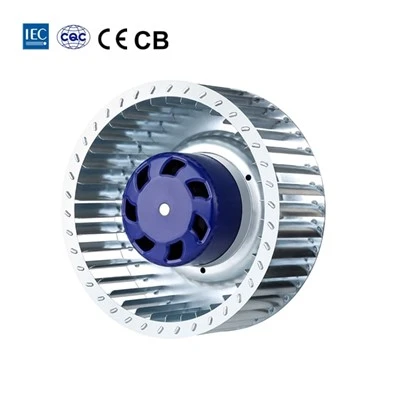
If you’re in the market for axial flow fans and want to talk about which standards apply to your specific application—whether you’re in agriculture, industrial, commercial, or hazardous environments—we’re here to help. We don’t do pushy sales calls; we take the time to understand your needs, walk you through the relevant standards, and make sure you get a fan that’s right for your space, your budget, and your compliance requirements.
EC Axial Fans References
ASHRAE Standard 51-2017, Laboratory Methods of Testing Fans for Aerodynamic Performance Rating
NFPA 70-2023, National Electrical Code
ASABE Standard EP386.2, Agricultural Ventilation for Livestock and Agricultural Commodities
ISO 5801:2017, Industrial fans — Performance testing using standardized airways
TIA-942-A, Telecommunications Infrastructure Standard for Data Centers
NEMA Standard ICS 2-2019, Enclosures for Electrical Equipment
Suzhou Blauberg Motoren Technology Co., Ltd.
Suzhou Blauberg Motoren Technology Co., Ltd. is one of the most professional axial flow fans manufacturers and suppliers in China, featured by quality products and good service. Please rest assured to buy bulk customized axial flow fans from our factory. Welcome to contact us for quotation.
Address: No. 8, Zhu Street, Industrial Park, Suzhou, JiangSu, China
E-mail: Andie@blauberg.cn
WebSite: https://www.blaubergmotors.com/
