Yo, what’s up! I’m a rep from a cobot supplier, and today I wanna chat about how cobots communicate with humans. It’s a super cool topic, especially in our line of work. Cobot
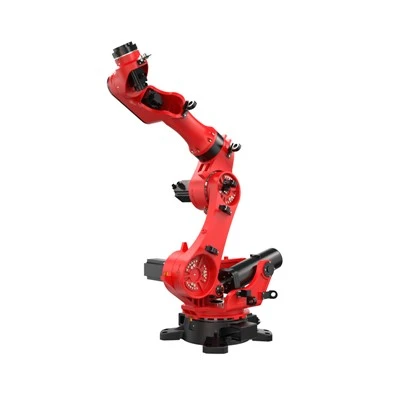
First off, let me give you a quick low – down on cobots. Cobots, or collaborative robots, are designed to work alongside humans. They’re not like those big, industrial robots that are kept in cages for safety. Cobots are all about teamwork with us humans, and communication is the key to making that teamwork work.
One of the most common ways cobots communicate with humans is through sensors. These sensors are kind of like the cobot’s "senses." For example, force sensors are used a lot. When a cobot is working with a human on an assembly task, the force sensors can detect the amount of force the human is applying. If the human needs to adjust the position of a part, the cobot can feel the force and move accordingly. It’s like a silent conversation between the cobot and the human. The cobot can sense if the human is pushing too hard or too soft and respond in real – time.
Proximity sensors are also crucial. These sensors let the cobot know when a human is nearby. If a human gets too close to the cobot’s working area in an unexpected way, the cobot can slow down or even stop. This is a safety feature, but it’s also a form of communication. It’s the cobot’s way of saying, "Hey, you’re getting a bit too close here. I’m gonna be careful to avoid any accidents."
Another way cobots communicate is through visual signals. Many cobots come with built – in LED lights. These lights can display different colors or patterns to convey information. For instance, a green light might mean that the cobot is working normally and is ready to collaborate. A yellow light could indicate that there’s a minor issue, like a low – battery warning. And a red light, well, that’s a clear signal that there’s a serious problem and the cobot needs to be checked. It’s a simple yet effective way for the cobot to tell us humans what’s going on with it without using words.
Some cobots also use touchscreens or displays. These can show all sorts of information, like the current task the cobot is performing, the progress of a job, or any error messages. A human operator can easily check this screen to see how things are going. It’s like having a dashboard of information right in front of them. And if the operator needs to input some data or commands, they can do it directly on the touchscreen. It’s a two – way form of communication where the cobot shows us info and we can give it instructions.
Audio signals are another important part of cobot – human communication. Cobots can make different sounds to let us know what’s happening. A beep might indicate that a task is completed, while a continuous warning sound could mean that there’s a malfunction. Some advanced cobots can even play voice messages. They can say things like "Task start" or "Error detected" in a clear voice. This is particularly useful in noisy industrial environments where visual signals might be hard to notice.
Now, let’s talk about something more high – tech: programming and software interfaces. Cobots are programmed to perform specific tasks, but the programming can also be used to enhance communication. We can create custom software interfaces that are user – friendly for human operators. These interfaces allow the operators to control the cobot easily, set parameters, and monitor the cobot’s performance. For example, an operator can use a tablet or a computer to send commands to the cobot. The cobot then executes those commands and sends back feedback to the interface. It’s a seamless way of communicating between humans and cobots.
In some cases, cobots can also learn from human behavior. Machine learning algorithms are integrated into the cobot’s system. When a human performs a task in a certain way multiple times, the cobot can analyze that behavior and adapt. This is a form of communication in a broader sense. The human is "telling" the cobot how to do things through their actions, and the cobot is learning and responding.
But communication isn’t always smooth sailing. There are some challenges. One of the biggest challenges is the complexity of human – like communication. Humans communicate in very subtle ways, using body language, tone of voice, and context. Cobots are still not as good at picking up on these subtle cues. For example, if a human gives a command with a sarcastic tone, the cobot might not understand the real meaning.
Another challenge is the standardization of communication protocols. Different cobot manufacturers might use different ways of communicating, which can make it difficult for users to switch between cobots or integrate multiple cobots into a single system.
Despite these challenges, the future looks bright for cobot – human communication. As technology advances, we can expect cobots to be even better at understanding and responding to human communication. We might see cobots that can understand more complex body language or have more natural – sounding voice interactions.
So, if you’re in the market for cobots, you can see how important communication is. A cobot that can communicate well with humans will make your work more efficient, safer, and more enjoyable. Whether you’re in manufacturing, logistics, or any other industry where cobots can be useful, having a good communication system is a game – changer.
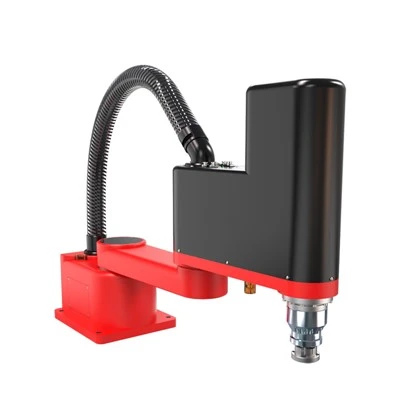
If you’re interested in learning more about our cobots and how they communicate with humans, or if you’re thinking about making a purchase, don’t hesitate to reach out. We’re here to answer all your questions and help you find the perfect cobot solution for your business.
Welding Robot References
- Robotics: Modelling, Planning and Control by Bruno Siciliano, Lorenzo Sciavicco, Luigi Villani, and Giuseppe Oriolo
- Industrial Robotics: Technology, Programming, and Applications by John A. Rehg
Robotic Technology (GD) Co., Ltd.
Robotic Technology (GD) Co., Ltd. is one of the most experienced cobot manufacturers and suppliers in China, also supports custom service and one year warranty. Please feel free to wholesale CE approved cobot for sale here from our factory. Contact us for quotation.
Address: Room 102, No. 30,Hengfeng 2nd Road,Daguo, Changping Town, Dongguan City,Guangdong,China
E-mail: admin@iroboticplus.com
WebSite: https://www.rb-tic.com/
