When I first started in the floating ball valve supply business 12 years ago, I heard a lot of myths about how these valves can’t hold up in high-stakes environments. But one question that keeps popping up more and more lately—especially as industrial facilities and commercial buildings prioritize fire safety protocols—is: Can a floating ball valve actually be used in a fire-safe environment? As someone who’s stood on manufacturing floors testing these valves, talked to plant engineers panicking after unexpected pipe bursts, and worked with fire marshals to meet code requirements, I’m here to break this down not just with technical specs, but with real-world experience. Floating Ball Valve

First, let’s get one thing straight: not all floating ball valves are made equal. Years ago, I worked with a refinery in the Midwest that tried cheap, off-brand floating ball valves for their fire suppression system. When a small test fire broke out in their pump room, two valves warped so bad they leaked water into adjacent wiring, causing more downtime than the fire itself. That’s when I realized: fire safety isn’t about slapping a label on a valve—it’s about design, materials, and testing that’s been validated for extreme heat and pressure.
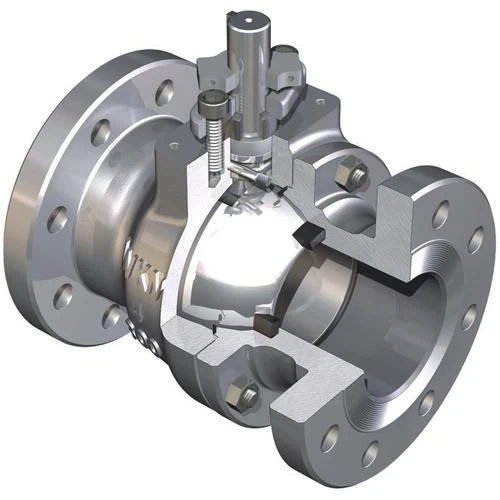
A floating ball valve works by using a hollow, spherical core that rotates 90 degrees to open or close flow. Unlike trunnion-mounted ball valves that have extra supports for heavy systems, floating valves rely on line pressure to hold the ball tight against the seat. But in a fire, two big things change: temperature spikes that can soften metal and rubber, and pressure shifts from expanding gases in pipes. So the key to using a floating ball valve in fire-safe environments is choosing the right components engineered to resist those specific stresses.
Let’s talk materials, because this is where most people go wrong. Standard floating ball valves use seats made of soft rubber or PTFE (Teflon) for everyday use. PTFE melts at around 327°C (621°F)—that’s hot, but sustained fire heat can easily push that higher, or the seat can erode fast once it hits that temp. So for fire applications, we spec graphite-based seats instead. Graphite doesn’t melt until it hits 3,600°C (6,500°F), and it maintains its sealing properties even when compressed at high heat. We also upgrade the ball and body materials to carbon steel or stainless steel alloys that are heat-treated to resist warping. Last year, we supplied valves to a food processing plant that stores large amounts of cooking oil—their fire suppression system needed valves that wouldn’t fail if a fryer line caught fire. We put graphite seats and 316 stainless steel balls on those floating valves, and they passed every fire test the local fire marshal threw at them.
But it’s not just parts—you have to test them, too. There’s a global standard for fire-safe valves called API 607, which outlines requirements for valves that need to maintain shutoff after exposure to a 700°C (1,292°F) fire for 30 minutes, followed by a pressure test to make sure they don’t leak. When we test our fire-rated floating ball valves, we don’t just do the minimum required. I’ve been in our in-house test lab when we run over these valves—we crank the heat higher, hold it longer, and even add pressure spikes that mimic a real fire scenario’s pipe expansion. Last quarter, a chemical plant client asked us to test a valve for their emergency shutdown system that would need to isolate a toxic line during a fire. We ran the API 607 test, but after that, we kept the valve at 750°C for another 15 minutes before testing. It held zero leak—so we knew it was good for their needs, not just the bare minimum.
Now, let’s address the elephant in the room: are floating ball valves better than other valve types for fire-safe environments? A lot of people will tell you trunnion-mounted ball valves are the only way to go for fire. But from my experience, that’s not always the case. Trunnion valves are great for large, high-pressure systems, but they’re more expensive and harder to maintain. Floating valves have a simpler design, are cheaper, and work just as well in fire-safe applications when spec’d correctly. For medium-sized fire lines, water treatment facilities, or commercial building sprinkler systems, floating ball valves are often a more practical choice. I had a client in Texas that manages 12 commercial high-rises—they were replacing all their old gate valves in sprinkler systems, and initially wanted trunnion ball valves. We talked through their needs: medium pressure, standard fire code requirements, budget constraints. We supplied them with fire-rated floating valves, and last winter, when one of the high-rises had a small electrical fire on a floor’s sprinkler line, the valve closed completely, contained the water, and didn’t leak at all during the fire. Their maintenance team was shocked they’d saved 30% on parts by going with floating valves instead of trunnion ones.
That said, there are clear limitations to keep in mind. Floating ball valves aren’t ideal for very high-pressure fire lines—over 150 PSI, trunnion valves offer more stability because they don’t rely on line pressure to hold the ball against the seat. Also, if your fire environment has corrosive chemicals, you need to make sure the valve’s body and seats are compatible with those chemicals at high heat—graphite seats work great, but some corrosive gases can affect graphite over extended exposure. And don’t forget installation: a valve is only as good as how it’s put in. I’ve seen floating valves fail in a fire because they were installed too tight, which warped the body when heated, or too loose, so the ball shifted and didn’t seal. We always walk our clients through installation best practices for fire-rated valves, because even the best parts won’t work if they’re not set up right.
Another point people miss: fire-safe valve testing isn’t just about the valve itself, it’s about the entire system. Last year, we worked with a pharmaceutical plant that was updating their fire suppression for their bulk chemical storage area. They wanted floating ball valves, but their engineer was worried about how the valves would interact with the rest of their pipe network during a fire. We brought our lead testing engineer out to their facility, ran a simulation test in their pipe layout, and even brought in a third-party fire safety consultant to oversee it. The valves held up, and the plant got approval from OSHA and their local fire department. That’s the kind of hands-on support we offer—we don’t just drop off valves and move on, we make sure they work for your specific fire environment.
I’ll be honest, there was a time when I doubted floating ball valves in fire-safe settings too. That Midwestern refinery disaster I mentioned earlier? It still sticks with me. We looked at those failed valves, and the problem wasn’t that they were floating valves—it was that they were cheap, unrated valves with standard rubber seats. Since then, we’ve completely revamped our line of fire-rated floating ball valves, and we test every single lot before they leave our warehouse. We don’t cut corners on materials or testing, because I know how much is at stake when a fire breaks out—lives, property, businesses.
So, to circle back to the original question: Can a floating ball valve be used in a fire-safe environment? The short answer is yes, but only if you pick the right one. Not all floating valves are created equal. Look for valves that meet API 607 or similar fire safety standards, have graphite seats and heat-treated metal bodies, and work with a supplier who knows fire environments inside and out. Don’t fall for the myth that only trunnion valves work for fire—floating valves are a reliable, cost-effective option when spec’d and installed correctly.
If you’re working on a project that involves fire-safe piping, whether it’s a commercial building, industrial plant, or chemical facility, I’d be happy to walk you through our fire-rated floating ball valves. We’ve tested them in real-world scenarios, worked with fire marshals to meet code requirements, and helped dozens of clients avoid the kind of valve failure that leads to costly damage. Don’t leave your fire safety to chance—reach out to discuss your needs, and we can find the right valve solution for you.
References
Butterfly Valve API Standard 607, 8th Edition, “Fire Test for Soft-Seated Quarter-Turn Valves”, American Petroleum Institute, 2021.
NFPA 13, “Standard for the Installation of Sprinkler Systems”, National Fire Protection Association, 2022.
European Standard EN 10204, “Metallic Products – Types of Inspection Documents”, European Committee for Standardization, 2004.
NACE Standard MR0175/ISO 15156, “Materials for Use in H2S-Containing Environments in Oil and Gas Production”, National Association of Corrosion Engineers, 2021.
Zhejiang Sunawei Valve Co., Ltd.
As one of the most professional floating ball valve manufacturers and suppliers in China, we offer a wide range of valves with superior quality. Please feel free to wholesale high quality floating ball valve at competitive price from our factory. We also accept customized orders.
Address: Anfeng Industrial, Oubei Town, Wenzhou City, Zhejiang, China
E-mail: snv@sunawevalve.com
WebSite: https://www.sunay-valves.com/
