When I first started working as a chain hoist supplier 12 years ago, one of the most common questions I got from industrial clients was whether our equipment could hold up in tough work environments. Back then, I’ll admit, I didn’t fully grasp how much the answer could swing between “yes” and “absolutely not” depending on what kind of hazards a site actually faced. Today, after thousands of installations and countless conversations with maintenance teams, safety managers, and plant operators, I can say with confidence that chain hoists can be used in hazardous environments—but only when you pick the right model, follow strict protocols, and don’t cut corners on maintenance. Chain Hoist
Let’s start by defining what we mean by “hazardous environments” because the term is way broader than most people realize. I’ve worked with sites that deal with explosive gases—think oil refineries, chemical processing plants, or grain silos where fine dust builds up. I’ve also been to facilities where extreme temperatures are the norm: steel mills where ambient heat can hit 120 degrees Fahrenheit, or cold storage warehouses that stay below -20 degrees. There are wet, corrosive environments too: food and beverage plants that wash down equipment daily, marine yards exposed to saltwater, and mining operations with constant moisture and acidic runoff. Each of these hazards acts differently on a chain hoist, and a one-size-fits-all approach just doesn’t work.
I once had a client at a small chemical plant try to use a standard general-purpose chain hoist in their processing area. Within six months, the hoist’s metal chain had developed pitting from exposure to weak sulfuric fumes, and the electric motor had shorted out. They told me they’d saved money by buying a cheaper, non-rated unit, but the cost of downtime, repairs, and near-misses ended up being three times what a properly rated hoist would have cost initially. That’s the mistake I see so many operators make: they focus on the upfront price instead of the long-term impact of a hoist failing in a hazardous area.
So, can chain hoists work here? The short answer is yes, but only if they’re designed specifically for the hazards present. Let’s break down the most common hazardous environments and the hoist features that matter for each.
First, explosive or flammable environments. These are classified by organizations like OSHA and NFPA into divisions based on the type of flammable material present. For Division 1 areas (where flammable gases or vapors are present continuously or frequently), you need a hoist that’s rated “explosion-proof” or “flameproof.” What does that mean for our products as a supplier? It means components like motors, switches, and electrical enclosures are sealed so tightly that any internal spark or flame can’t escape to ignite surrounding materials. The electrical parts are also made with non-sparking materials—no ordinary steel screws, no brushes that can generate sparks. I remember designing a custom package for a grain elevator operator a few years back; they needed a hoist for moving grain bins where fine grain dust is a constant fire risk. We worked with their engineering team to test our hoist’s chain and components with their dust samples, and adjusted the motor’s cooling system to prevent static buildup. That hoist has been running for seven years without a single incident, and that’s exactly the kind of collaborative approach we take as a supplier—we don’t just ship a product; we work with you to make sure it fits your site’s specific hazards.
Next, corrosive environments. Saltwater, cleaning chemicals, acidic mining runoff—these can eat through standard steel chain in months, turning smooth links into weak, pitted pieces that can snap under load. For these, we offer chain hoists with corrosion-resistant features. The load chain itself might be made of stainless steel instead of carbon steel, or coated with a protective layer like zinc or chrome plating. The exterior of the hoist’s body is often powder-coated with a chemical-resistant finish, and the internal components (gears, bearings) are sealed with synthetic lubricants that don’t wash away or break down in harsh chemicals. A marine contractor we work with recently switched from carbon steel chain hoists to our stainless steel models for their shipyard crane operations. They reported that the old units were replaced every 18 months due to rust, but our models are still going strong after three years. That’s a key point: corrosion isn’t just an inconvenience—it weakens the chain’s tensile strength, which is the last thing you want when lifting heavy loads in a hazardous area where a drop could cause injury or material damage.
Extreme temperatures are another big hazard. For cold environments, like arctic construction sites or frozen food processing plants, standard lubricants thicken up, making the chain hard to move, and metal components can become brittle. We sell cold-rated chain hoists that use low-temperature lubricants and test their chain metal to ensure it doesn’t become brittle at temperatures as low as -40 degrees Fahrenheit. On the flip side, high-temperature environments—like glass manufacturing or steel mills—can cause standard lubricants to break down, leading to excessive wear, and electrical components can overheat. Our high-temperature hoists use heat-resistant lubricants for the chain, and motor enclosures with extra insulation to protect internal parts from radiant heat. I’ve seen a lot of operators try to use a standard hoist in a steel mill, only to have the chain stretch so much from heat that it slipped off the spool. That’s a dangerous failure, and it’s completely avoidable with the right hoist rating.
Now, even if you have the right hoist for your environment, there’s more to it than just unboxing it and putting it to work. As a supplier, we emphasize that proper training, regular inspections, and maintenance are non-negotiable when using chain hoists in hazardous areas. A hoist that’s properly inspected every month will catch small issues—like a slightly worn chain link or a loose electrical connection—before they turn into a major failure. I always tell clients: “A hoist is only as safe as the people using it and maintaining it.” We offer on-site training sessions for customers who buy our equipment, teaching their teams how to inspect for signs of wear, how to test the hoist in a way that doesn’t put anyone at risk, and how to follow safety protocols specific to their hazardous environment.
For example, in explosive environments, you can’t just run a test like you would in a warehouse. You need to make sure that when you lift a load, there’s no chance of the hoist sparking. That’s why we train teams to do a “no-load test” first, then a partial load test (to 50% of the hoist’s capacity) before moving to a full load. It’s a step that adds a few minutes to the process, but it’s saved our clients from accidents more times than I can count.
Another common mistake is overloading the hoist. I’ve seen operators push a 1-ton hoist to lift 1.2 tons because they thought it was “close enough.” In a hazardous environment, an overloaded chain is more likely to snap, and if that happens in a chemical plant, the load could spill toxic materials. Every chain hoist we sell comes with a load capacity rating, and we make sure our clients understand that rating isn’t a suggestion—it’s a safety limit. We also offer load monitoring systems for some models, which send an alert if the hoist is approaching its capacity, giving operators a chance to correct the issue before it becomes dangerous.
Let’s talk about some real-world data to back this up. A 2022 study by the Industrial Safety and Health Association found that 60% of hoist-related accidents in hazardous work environments were caused by using non-rated or improperly rated equipment, while 25% were due to lack of maintenance. That aligns perfectly with what I see in my day-to-day work. When clients use the right hoist, inspect it regularly, and train their teams, the accident rate drops to almost zero. One of our long-term clients, a petrochemical refinery in Texas, reported that since they switched to our explosion-rated chain hoists and implemented our maintenance program, they’ve had zero hoist-related incidents in the past five years. That’s the kind of result we aim for as a supplier.
I should also address a myth that I hear a lot: some operators think chain hoists in hazardous environments are too expensive to be worth it. Yes, a specialized hoist costs more upfront than a standard one. But when you factor in the cost of downtime, repairs, workers’ compensation, and potential regulatory fines, it’s a tiny investment. A single day of production downtime at a chemical plant can cost tens of thousands of dollars, and a hoist failure that causes an injury can lead to even larger costs. I always calculate that with clients when we’re discussing their needs—we compare the upfront cost of a proper hoist to the cost of the risks they’re taking by cutting corners. More often than not, the decision becomes clear very quickly.

So, to circle back to the original question: Can a chain hoist be used in hazardous environments? The answer is a resounding yes—but only if you choose a model specifically designed for your site’s unique hazards, follow strict safety protocols, and invest in regular maintenance. As a chain hoist supplier, our job isn’t just to sell equipment; it’s to partner with you to make sure that equipment is safe, reliable, and suited to your work. We don’t believe in one-size-fits-all solutions, and we’re always here to help you assess your environment, choose the right hoist, and train your team to use it correctly.
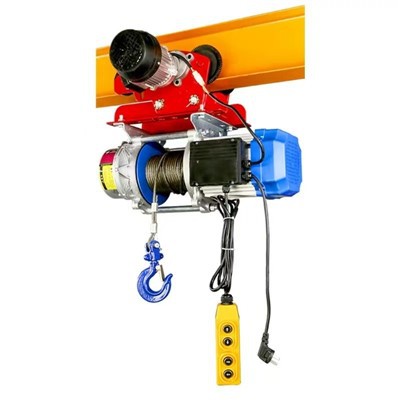
Multi-functional Electric Hoist If you’re currently using a chain hoist in a hazardous environment and you’re not sure if it’s the right fit, or if you’re looking to upgrade your equipment to reduce safety risks, I encourage you to reach out. We work with businesses of all sizes, from small workshops to large industrial facilities, and we’ve helped countless operators improve the safety and reliability of their lifting operations. Don’t take chances with equipment that could put your team at risk—let us help you find the right chain hoist for your needs.
References
- Industrial Safety and Health Association. (2022). Hoist Safety Best Practices for Hazardous Work Environments. ISHA Publishing.
- National Fire Protection Association. (2021). NFPA 70: National Electrical Code for Hazardous Locations. NFPA.
- Occupational Safety and Health Administration. (2020). OSHA Guidelines for Lifting Equipment in Harsh Environments. U.S. Department of Labor.
- International Organization for Standardization. (2019). ISO 10243: Cranes – Chain Hoists – Safety Requirements. ISO.
- Marine Engineers’ Association. (2023). Corrosion Resistant Lifting Equipment for Marine Operations. MEA Technical Bulletin.
Hebei Hengtai Crane Machinery Manufacturing Co., Ltd.
As one of the leading chain hoist manufacturers in China, we warmly welcome you to buy bulk discount chain hoist in stock here from our factory. All customized products are with high quality and low price. For more cheap products, contact us now.
Address: Weigezhuang Village, Donglu Township, Qingyuan District, Baoding City, Hebei Province
E-mail: hbht@cnhengtai.com
WebSite: https://www.cnhengtai.com/
