As a seasoned supplier of Taihu Stone, I’ve had the privilege of working closely with various types of garden stones over the years. This hands – on experience has allowed me to observe and understand the distinct characteristics that set Taihu Stone apart from its counterparts. In this blog post, I’ll delve into the differences between Taihu Stone and other garden stones, exploring aspects such as origin, appearance, texture, and cultural significance. Taihu Stone
Origin and Formation
Taihu Stone, as the name suggests, is primarily sourced from Lake Tai, a large freshwater lake located in the Jiangsu and Zhejiang provinces of China. The formation of Taihu Stone is a result of millions of years of natural processes. It is mainly composed of limestone, which has been continuously eroded by the water currents, waves, and dissolved carbon dioxide in Lake Tai. This long – term erosion has created a unique porous and honeycombed structure in the stone.
In contrast, other garden stones have diverse origins. For example, granite, a commonly used garden stone, is an igneous rock formed from the slow crystallization of magma beneath the Earth’s surface. It is found in many parts of the world, including North America, Europe, and Asia. Sandstone, another popular garden stone, is a sedimentary rock composed of sand – sized grains of mineral, rock, or organic material. It is formed through the deposition and cementation of sand particles over time, often in riverbeds, beaches, or deserts.
The distinct origins of these stones play a significant role in determining their physical and chemical properties, which, in turn, affect their appearance and suitability for different garden applications.
Appearance
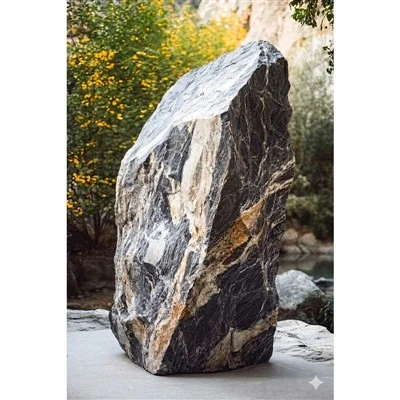
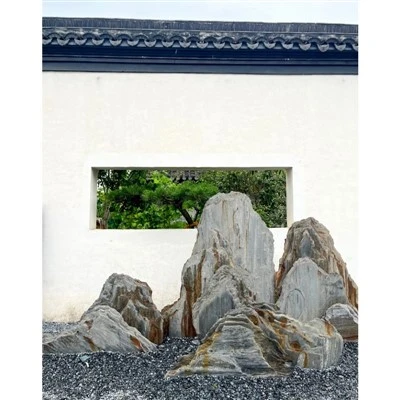
One of the most striking differences between Taihu Stone and other garden stones lies in their appearance. Taihu Stone is known for its unique shape and pattern. It often features irregular contours, with sharp ridges, deep grooves, and numerous holes. These holes and grooves can be seen as windows or passageways, giving the stone a sense of depth and mystery. The natural curves and twists of Taihu Stone also mimic the shapes of mountains and cliffs, adding a touch of natural grandeur to any garden.
Granite, on the other hand, typically has a more uniform and solid appearance. It comes in a variety of colors, including white, pink, gray, and black, but its surface is generally smooth and lacks the intricate details found in Taihu Stone. The grains of granite are visible to the naked eye, giving it a coarse – textured look.
Sandstone has a more earthy and rustic appearance. It is usually available in warm colors such as brown, red, and yellow. The surface of sandstone can be either smooth or rough, depending on its formation and the degree of weathering. Unlike Taihu Stone, sandstone does not have the characteristic holes and intricate patterns.
Texture
The texture of a garden stone can greatly affect its tactile feel and its overall aesthetic in a garden setting. Taihu Stone has a rough and porous texture. Running your hand over a Taihu Stone, you can feel the uneven surface, with the edges of the holes and grooves providing a sense of tactile interest. This porous texture also allows for the growth of moss and other small plants, further enhancing its natural look over time.
Granite has a hard and smooth texture. Its density makes it resistant to scratches and wear, which is why it is often used in high – traffic areas such as walkways and patios. The smooth surface of granite gives it a modern and polished look.
Sandstone has a variable texture. Some sandstones are quite fine – grained and smooth, while others are more coarse – grained and rough. The porous nature of sandstone can also make it more absorbent than granite, which may require special treatment to prevent staining.
Cultural Significance
Taihu Stone holds a special place in Chinese culture. For centuries, it has been highly prized in Chinese garden design, symbolizing the ideals of harmony, beauty, and nature. In traditional Chinese gardens, Taihu Stone is often used as a focal point, representing the mountain or the backbone of the garden. It is also associated with the concept of "shanshui" (mountains and water), which is a fundamental element in Chinese art and philosophy.
In contrast, granite and sandstone have different cultural connotations in various parts of the world. In Western cultures, granite is often seen as a symbol of strength and durability, which is why it is commonly used in public monuments and buildings. Sandstone is also used in architecture and sculptures, and in some cultures, it is associated with the earth and stability.
Practical Considerations
When it comes to practical aspects such as durability and maintenance, there are also differences between Taihu Stone and other garden stones. Taihu Stone, although beautiful, is relatively more fragile compared to granite. The porous nature of Taihu Stone makes it more susceptible to damage from physical impact and chemical corrosion. However, with proper care, it can last for a long time in a garden setting.
Granite is one of the most durable garden stones available. It is resistant to heat, scratches, and stains, making it a low – maintenance option for outdoor use. Sandstone, while also durable, requires more maintenance than granite. It may need to be sealed regularly to prevent water absorption and staining, especially in areas with high rainfall or humidity.
In terms of cost, Taihu Stone is often more expensive than common garden stones like granite and sandstone. The rarity of high – quality Taihu Stone, combined with its cultural and aesthetic value, contributes to its higher price tag.
Conclusion
In conclusion, Taihu Stone stands out from other garden stones in many aspects. Its unique origin, appearance, texture, cultural significance, and practical considerations make it a one – of – a – kind addition to any garden. Whether you are looking to create a traditional Chinese garden or simply want to add a touch of natural beauty to your outdoor space, Taihu Stone can offer a level of sophistication and charm that is hard to replicate with other stones.
Basalt Rock Fountain If you are interested in incorporating Taihu Stone into your garden project, I would be more than happy to assist you. I have a wide selection of high – quality Taihu Stones, and my team of experts can provide you with professional advice on selection, placement, and maintenance. Contact me to start discussing your project and explore the possibilities that Taihu Stone can bring to your garden.
References
- Liang, J. (2018). Chinese Traditional Garden Stones: History, Culture and Aesthetics. Beijing: Forbidden City Publishing House.
- Harrell, R. (2019). Garden Stones: A Practical Guide. London: Garden Press.
Orin International Trade Co., Ltd.
With abundant experience, we are one of the most professional taihu stone manufacturers and suppliers in China. We warmly welcome you to wholesale custom made taihu stone from our factory. If you have any enquiry about cooperation, please feel free to email us.
Address: No.3-1, Shangzhongdi Natural Village, Hexian Village, Shuangta Sub-district, Jiangshan City, Quzhou City, Zhejiang Province
E-mail: atlas@orinstone.com
WebSite: https://www.orinstone.com/
