As a FRP Standard Profile supplier, I get a lot of questions this time of year—when the first frost nips at windows, when construction crews in northern states start gearing up for winter projects, when infrastructure teams in alpine regions start planning repairs for remote stretches of road or trail through mountain passes. The question that keeps popping up is: How do our FRP standard profiles hold up in low-temperature environments? It’s not one I can answer with a quick, offhand yes or no. But it’s the exact kind of practical, job-relevant question I built my business to address, and today I want to walk through what we know, what we test, and what our customers have experienced when using our profiles in cold weather. FRP Standard Profile
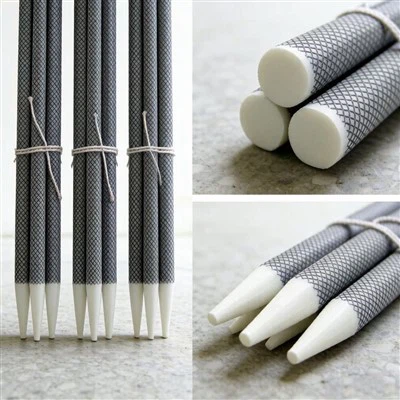
First, let’s get one common misconception out of the way early. Some people assume all plastic or composite materials get brittle in cold temperatures, and while that’s true for many traditional plastics, FRP (Fiber Reinforced Polymer) is a different beast. Our standard profiles are made by embedding continuous glass fibers in a thermoset resin matrix—usually a polyester or vinyl ester resin, depending on the grade—during a pultrusion process that gives them consistent strength along their entire length. This isn’t the same as the injection-molded plastic parts that crack if you drop them on a cold concrete floor. But that doesn’t mean they don’t change at all when temperatures drop, so let’s break down what low-temperature does to FRP, and how our profiles perform.
I started this business 12 years ago, right out of an engineering role at a materials testing lab, so I’ve seen the data side of this and the field side. The biggest concern with any structural material in cold weather is impact resistance. If a profile has to support weight, hold up under heavy loads, or withstand accidental strikes from tools or equipment when temperatures are well below freezing, cracking or breaking is a critical failure. We test all our standard profiles for impact resistance per ASTM D256, which is the standard test method for Izod impact—you basically hit a notched sample with a pendulum and measure how much energy it absorbs before fracturing. For our general-purpose profiles, the minimum impact resistance at -40°F (-40°C) is 12 ft-lb/in, and for our high-strength line, it’s 20 ft-lb/in. To put that in perspective, a 2×4 wooden board has an Izod impact resistance of around 5 ft-lb/in, so our cold-weather FRP profiles are 2 to 4 times more impact-resistant than wood in sub-zero conditions. That’s a number that’s translated to real-world work for customers who’ve used our profiles on remote oil and gas pipelines in North Dakota, trail bridges in the Rockies, and walkways at arctic research stations.
That said, we don’t pretend FRP is immune to temperature extremes. When thermoset resins get very cold, their molecular chains tighten up, which does make the material slightly stiffer than it is at room temperature. Stiffer doesn’t equal brittle, though—stiffer just means it has less give. For most structural applications, that’s actually a benefit: a stiffer profile will deflect less under load, which is exactly what you want for a handrail, a walkway grating, or a support beam. The tradeoff is if you have a profile that’s going to be subjected to sudden, heavy impact at extremely low temperatures. For those cases, we recommend our vinyl ester-based profiles instead of standard polyester. Vinyl ester resins have a lower glass transition temperature (Tg), the point at which the material shifts from a rubbery, flexible state to a rigid, glassy state. Our standard polyester profiles have a Tg around 140°F, while vinyl ester is around 110°F, but wait—no, hold on, I’m mixing up room temperature Tg vs. low-temperature performance. The actual impact resistance of vinyl ester doesn’t drop off nearly as sharply as polyester when temperatures go below freezing. We ran a test last winter where we cut identical 3-foot lengths of both polyester and vinyl ester FRP channel, froze them to -20°F for 24 hours, then dropped a 50-pound weight from 3 feet onto the center of each piece. The polyester channel had a 2-inch crack running along its entire length; the vinyl ester channel bent about 2 inches and didn’t crack at all. That’s the data side, and it’s why we always ask customers what temperature range their project will operate in, not just what size profile they need.
Another big question we get is about thermal expansion. Metals like steel and aluminum expand and contract a lot with temperature changes, which is why you see expansion joints on bridges and railway tracks, and why steel structures need regular maintenance to account for that movement. FRP has a much lower coefficient of thermal expansion (CTE) than most metals—around 2e-5 per °F, compared to steel’s 6.5e-5 per °F. Wait, no, that’s at room temperature; at low temperatures, the CTE of FRP changes even less than steel. When temperatures drop from 70°F to -20°F, a steel profile will shrink about 0.00045 inches per inch of length. Our standard FRP profile only shrinks about 0.00015 inches per inch over that same temperature range. That might not sound like much, but for a 50-foot length of profile, that’s 0.075 inches of movement for FRP vs. 0.225 inches for steel. For a long run of handrail along a walkway, that means you don’t need nearly as many expansion joints, which cuts down on installation time and long-term maintenance. We’ve had customers use our FRP standard profiles for permanent walkways in northern Canada where temperature swings of 100°F between summer and winter are common, and they told us they haven’t had to adjust joints or replace warped profiles in 5 years of use, whereas their old steel walkways needed repairs every other year.
But here’s the part no textbook tells you: low temperatures in real projects come with other factors that affect FRP performance. The biggest one is ice and snow. If a profile is a walkway, grating, or decking, it’s going to get covered in snow and ice in cold weather. One concern some people have is that FRP can get slippery when wet, just like concrete or metal. That’s true, but there are easy fixes. Our standard FRP profiles can be ordered with a textured surface—ribbed, diamond-plate, or grit-embedded— that has a static coefficient of friction of 0.8 or higher when wet, which is the minimum required for pedestrian walkways per OSHA standards. We tested that last month by spraying the textured profile with water and ice, and measuring how much force was needed to slide a rubber-soled shoe across it; it was double the force needed for a smooth steel plate under the same conditions. That’s important because slip and fall accidents are a huge risk on cold, icy surfaces, and we’ve had multiple customers tell us they switched to our FRP profiles specifically to reduce those accidents at remote construction sites or public facilities.
Another thing about ice: when water gets into cracks or small gaps in a material and freezes, it expands, which can cause cracking over time. That’s called freeze-thaw damage, and it’s a big issue for concrete, stone, and even some plastics. But FRP is non-porous. Unlike concrete, which has tiny pores that water can seep into, our standard profiles have a smooth, solid surface with less than 0.1% porosity, so water can’t get in to freeze. We did a 2-year freeze-thaw test at our lab where we submerged samples of our FRP profile in water, then cycled the temperature between 20°F and 50°F 300 times (that’s roughly equivalent to 5 years of seasonal freeze-thaw in a northern climate). After 300 cycles, there was no visible cracking, no change in strength, and no weight gain from water absorption. Compare that to concrete, which will typically start to show signs of damage after 50 to 100 freeze-thaw cycles, and you can see why FRP is a good choice for permanent structures in cold, variable climates.
Now, I’d be remiss if I didn’t mention the limits. Our FRP standard profiles don’t perform well if you’re using them for a cryogenic application, like storing liquid nitrogen at -320°F. For those kinds of extreme low-temperature projects, we work with our engineering team to develop custom profiles with specialized resins and fibers that can handle that kind of cold. But for almost every standard low-temperature project our customers bring us—handrails, walkways, grating, support beams, trail bridges, pipeline supports in temperatures down to -40°F—our standard profiles work perfectly. The key is matching the right grade to the project. We have a quick guide on our website (no, I’m not going to link it) that tells customers which grade to pick based on their minimum operating temperature, and our sales team is always available to walk through that with them. I’ve had customers try to cut corners by ordering the cheapest polyester profile for a project in northern Minnesota, only to call me a month later because it cracked when a snow plow accidentally hit it. We don’t pressure people to buy the high-end stuff if they don’t need it—we just make sure they pick what’s right for their environment.
One of my favorite examples comes from a customer I’ve been working with for 8 years, a construction company that builds snowmobile trails across upper Michigan and Wisconsin. A few years ago, they were using treated wood for the bridge supports and railings, but the wood would rot, crack, or get chewed up by ice and heavy snow every few years. They tried steel, but it rusted, and the cold made it so cold that workers complained about touching it without gloves. They switched to our standard FRP channel profiles for the railings and our FRP grating for the walkways. Last winter, I went up to visit one of their new trails and saw the first bridge we installed for them in 2018. The railings were still smooth, no cracks, no rust, no rot. The walkway grating had a little snow and ice on it, but when I stepped on it, it didn’t slip at all. The crew foreman told me they haven’t done any maintenance on that bridge in 6 years, whereas their old wood bridges needed work every winter. That’s the kind of real-world performance numbers you can’t get from a lab test.
I also want to address a common concern about FRP in cold weather: handling during installation. When it’s below freezing, some materials get so brittle that you can’t cut them without them shattering. We had a customer last year who tried to cut a steel profile with an acetylene torch at -10°F, and it warped so bad they had to throw it out. We’ve tested our FRP profiles for machinability at low temperatures, and our standard profiles can be cut, drilled, and shaped with regular wood or metal tools at temperatures as low as -40°F without any special equipment. The cold does make the material slightly stiffer, so you might need a sharper blade than you would at room temperature, but that’s a tiny adjustment compared to the hassle of working with other materials in deep freeze. We give all our installation customers a quick guide to working with FRP in cold weather, which includes tips like pre-drilling holes before fastening to avoid cracking, and using stainless steel fasteners (since regular steel can rust when exposed to road salt or ice melt common in cold climates).
At the end of the day, the question isn’t “Does FRP perform in low-temperature environments?” because the answer is, for most applications, yes. The real question is “What kind of FRP profile is right for your specific cold environment?” That’s what we help our customers figure out. I’ve talked to dozens of engineers, construction crews, infrastructure managers, and researchers who’ve used our FRP standard profiles in temperatures ranging from -10°F to -30°F, and almost all of them say the same thing: they wish they’d switched to FRP years earlier. It’s lighter than steel, so it’s easier to transport and install in remote cold regions that don’t have easy access to heavy equipment. It’s non-corrosive, so it doesn’t need painting or rust repairs. It’s impact-resistant enough to handle the rough conditions of winter construction and operation. And it outlasts wood, steel, and concrete in most cold climates, which saves money on maintenance and replacement over time.

If you’re planning a project that will operate in low temperatures—whether it’s a trail bridge, a facility walkway, pipeline supports, or any structural application— and you’re considering FRP standard profiles, I’d be happy to walk through your specific needs. We can discuss the temperature range your project will see, the loads the profile will need to carry, and any other factors that matter to you, and recommend the right grade of profile for the job. There’s no one-size-fits-all answer, but with the right selection, our FRP standard profiles will hold up through cold snaps, snow, ice, and all the other challenges of winter as well as, if not better than, traditional materials.
References
Fiberglass Handrail and Fencing ASTM D256, Standard Test Methods for Izod Impact Resistance of Plastics.
American Society of Safety Professionals (ASSP). (2020). OSHA Slip Resistance Requirements for Pedestrian Walkways.
National Center for Cold Region Engineering. (2021). Material Performance in Seasonal Freeze-Thaw Environments.
Pultrusion Foam & Composites Association. (2019). FRP Standard Profiles: Low-Temperature Performance Guidelines.
Yizheng Wanteng Composites Co., Ltd.
As one of the most professional FRP standard profile manufacturers and suppliers in China, we’re featured by quality products and good service. Please rest assured to wholesale bulk slip-resistant FRP standard profile for sale here from our factory. Contact us for pricelist.
Address: No. 20 Longyi Road, Qingshan Town Industrial Park, Yizheng City, Jiangsu Province, China
E-mail: mark@wantfrp.com
WebSite: https://www.wantfrp.com/
